Peptide Manufacturer vs Trading Company: Which Should Buyers Choose?
Choosing the cheapest peptide source can look efficient. Yet weak communication, unclear documentation, and poor supply coordination can create much larger costs later.
Buyers should not choose a peptide supplier only by asking whether it is a manufacturer or a trading company. The better choice is the supplier that provides reliable quality evidence, clear documentation, realistic communication, and stable long-term supply support.
When buyers begin sourcing peptides from China, they often ask one question first:
Are you a manufacturer or a trading company?
I understand why they ask. A direct manufacturer may appear more reliable. Buyers may assume that factories provide better pricing, stronger technical knowledge, and more control over quality.
Sometimes that assumption is correct. Sometimes it is not.
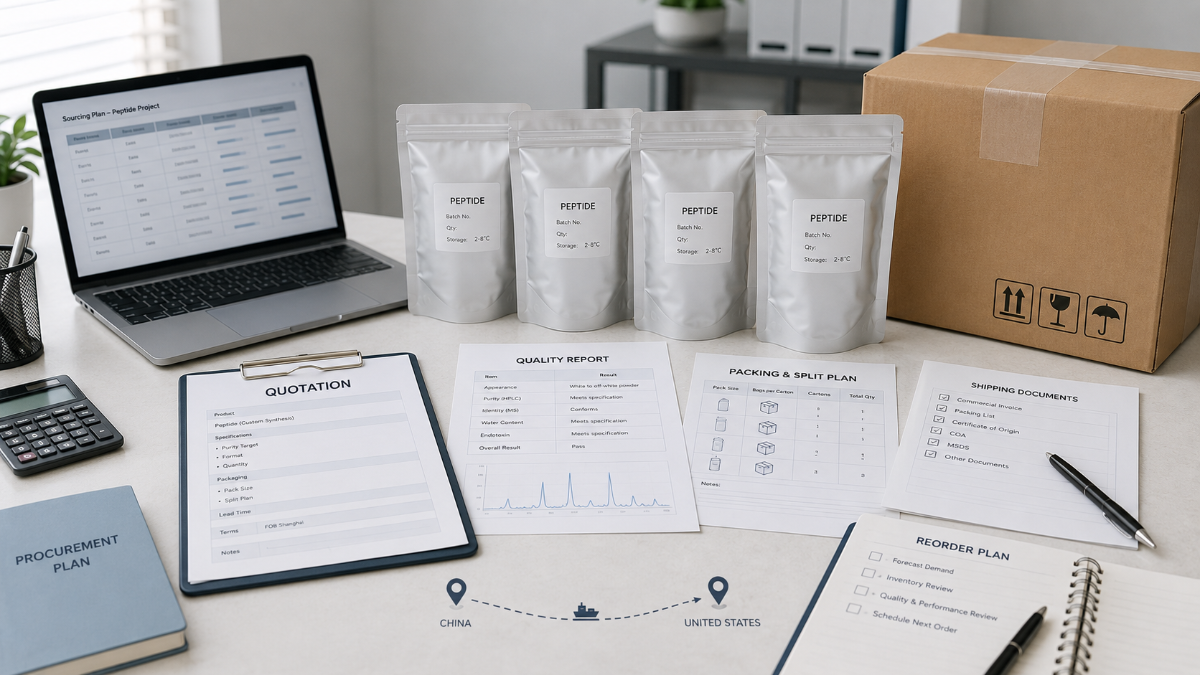
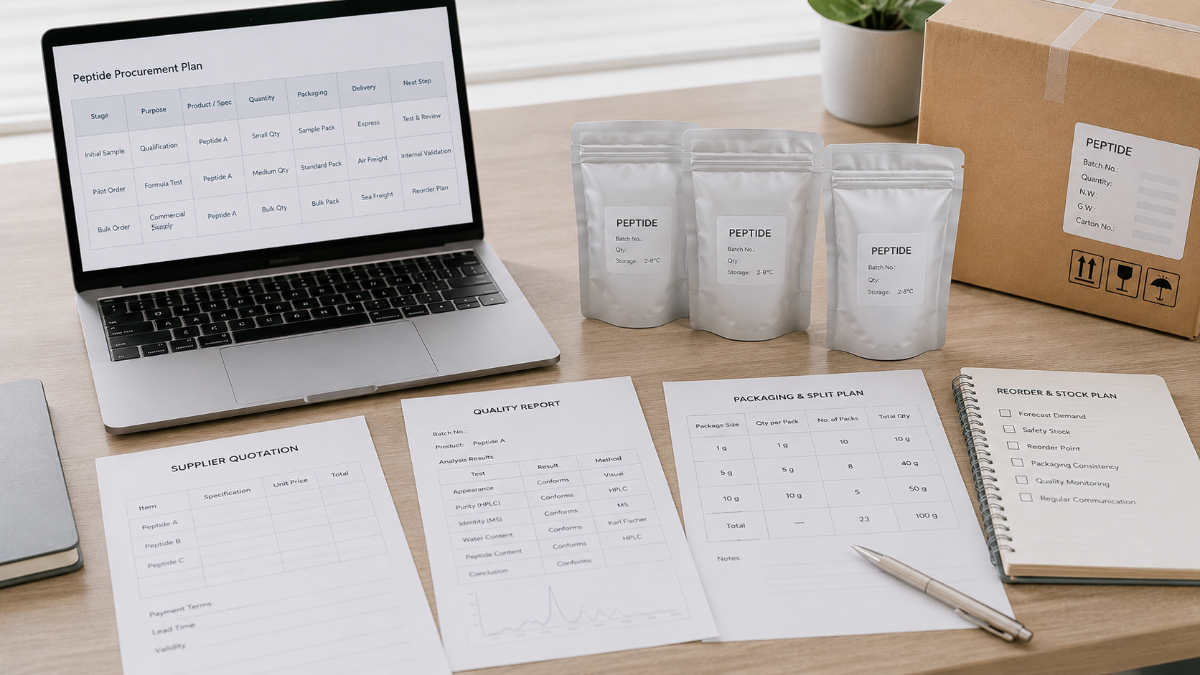
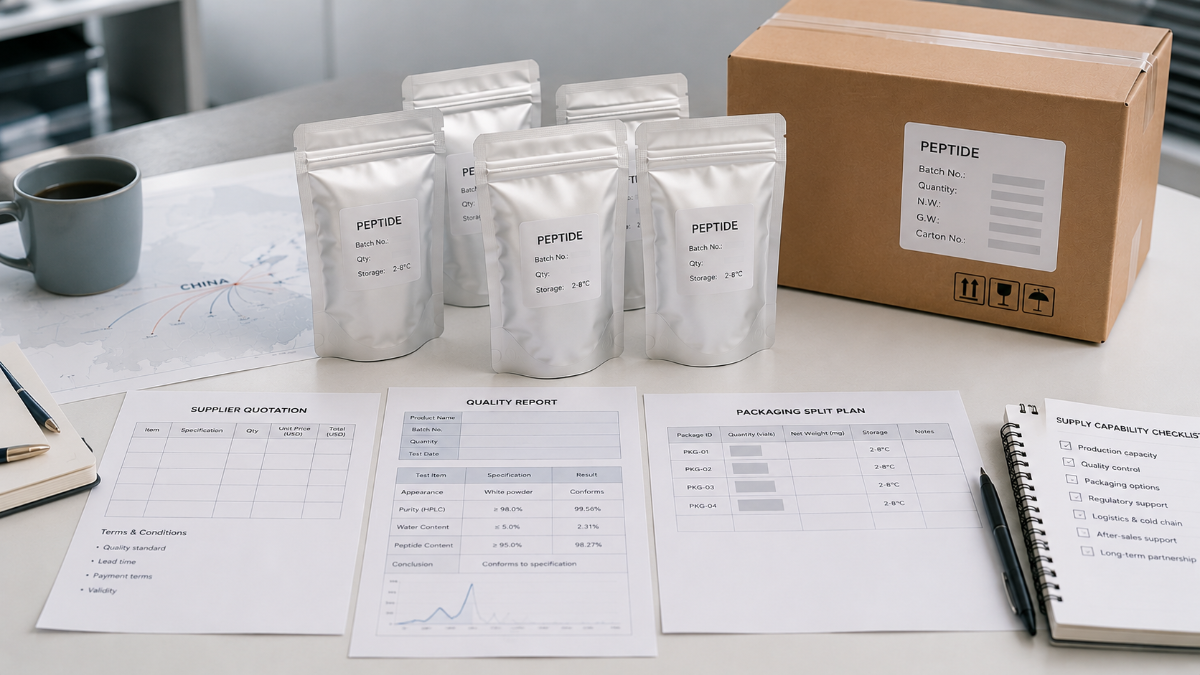
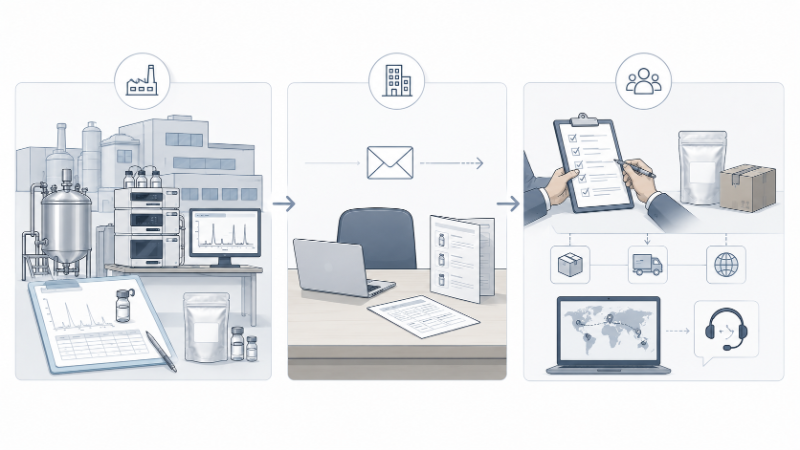
The real peptide supply chain is more complex. Some manufacturers are excellent at production but weak at international communication. Some trading companies only forward quotations and add little value. Some professional supply partners coordinate qualified manufacturing resources, analytical documentation, packaging, logistics, and customer communication more effectively than a factory sales team.
At MoxPeptide, we do not believe buyers should choose a supplier based on a label alone. Based in Xi’an, China, we serve as a professional peptide supply partner for global buyers. We connect customers with qualified manufacturing resources while coordinating documentation, communication, logistics, and repeat-order planning.
Our view is simple: factory ownership matters, but execution matters more.
Is a Peptide Manufacturer Always Better Than a Trading Company?
Many buyers assume that direct sourcing is always safer. Yet direct access does not automatically create better quality, communication, or supply reliability.
A peptide manufacturer is not always the best choice for every buyer. Direct factories may offer production expertise, while professional supply partners may provide stronger coordination, documentation support, communication, and logistics management.
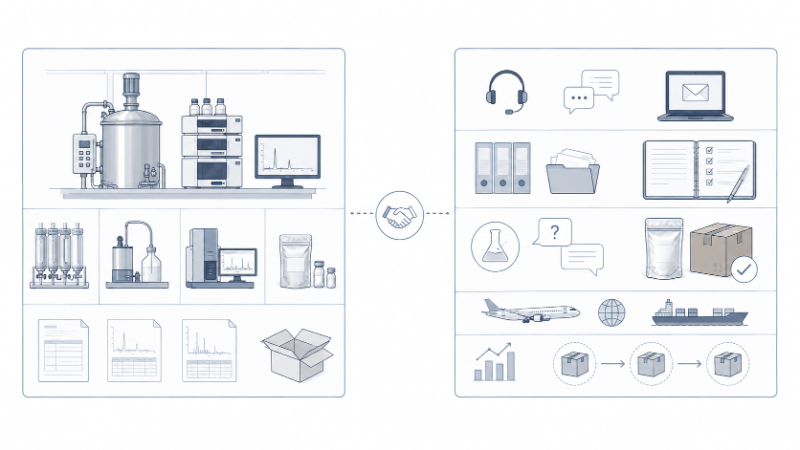
I prefer to separate the question into two parts.
The first question is:
Who controls the production process?
The second question is:
Who can manage the complete sourcing process effectively?
These questions are related, but they are not identical.
A peptide manufacturer may control synthesis, purification, testing, and packaging. This can be valuable when a buyer needs technical discussion, custom synthesis, or larger-scale production planning.
Yet some manufacturers are focused mainly on production. Their sales teams may not be strong at answering overseas buyers quickly. Their documents may not be organized for international review. Their quotations may not explain packaging, lead times, or logistics clearly.
A professional supply partner can add value by reducing this friction.
Manufacturer and Trading Company Comparison
| Area | Direct Manufacturer | Basic Trading Company | Professional Supply Partner |
|---|---|---|---|
| Production Access | Direct | Indirect | Coordinated through qualified resources |
| Product Range | May focus on selected products | May offer a broad catalog | Can match buyers with suitable supply resources |
| Technical Communication | Can be strong, but response speed varies | Often limited | Coordinates technical questions and customer communication |
| Documentation | Depends on internal process | May only forward files | Organizes available documents for buyer review |
| Packaging Coordination | Factory-led | May be unclear | Coordinated based on buyer requirements |
| International Logistics | May be basic | May be available | Managed as part of the sourcing process |
| Repeat-Order Planning | Production-focused | Often transactional | Designed around long-term support |
| Buyer Experience | Varies widely | Varies widely | Focused on reducing sourcing friction |
I do not believe that every trading company is weak. I also do not believe that every factory is automatically reliable.
The buyer should examine what the supplier actually does.
At MoxPeptide, our role is not limited to forwarding a catalog. We help buyers coordinate quality documentation, packaging, shipping options, lead times, technical questions, and future supply planning. This is important because international procurement involves more than production alone.
Who Is the Best Company to Buy Peptides From?
Many suppliers claim to offer the best quality and the best price. Those claims are not enough for a serious procurement decision.
The best peptide company is the one that fits the buyer’s application, provides relevant analytical documentation, communicates clearly, and supports stable repeat orders with realistic planning.
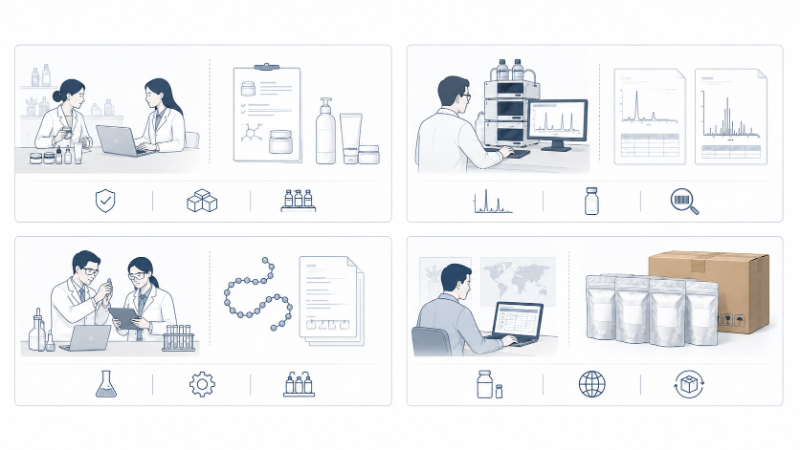
I do not believe that one supplier is the best choice for every project.
A cosmetic brand sourcing GHK-Cu or Acetyl Hexapeptide-8 may need stable bulk quantities, reliable documentation, and repeat-order consistency.
A research team sourcing BPC-157, TB-500, or another research peptide may focus more on purity, sequence accuracy, and analytical reports.
A biotech company requesting a custom peptide may need feasibility review, sequence confirmation, modifications, scale-up planning, and confidentiality.
The correct supplier depends on the project.
What Buyers Should Match Before Choosing a Supplier
| Buyer Type | Main Requirements | Supplier Capability to Review |
|---|---|---|
| Cosmetic Brand | Batch consistency, wholesale quantities, documentation | Stable supply and repeat-order support |
| Laboratory or Research Team | Purity, identity, traceability | HPLC, MS, COA, and technical communication |
| Biotech Company | Custom sequence, modifications, feasibility | Technical coordination and scale-up planning |
| Distributor | Product range, packaging, supply continuity | Logistics support and long-term availability |
| Procurement Team | Risk reduction, communication, internal approval | Organized sourcing and documentation process |
At MoxPeptide, we begin by understanding the buyer’s use case. We ask about the peptide, quantity, target purity, destination, packaging requirements, documentation needs, and future demand.
This helps us prepare a sourcing plan that fits the project rather than sending a generic product list.
How to Pick a Peptide Company?
A supplier shortlist can look confusing. Many websites use similar language and make similar quality claims.
To pick a peptide company, buyers should compare quality evidence, batch traceability, documentation, communication, supply capability, packaging, logistics, and repeat-order support rather than price alone.
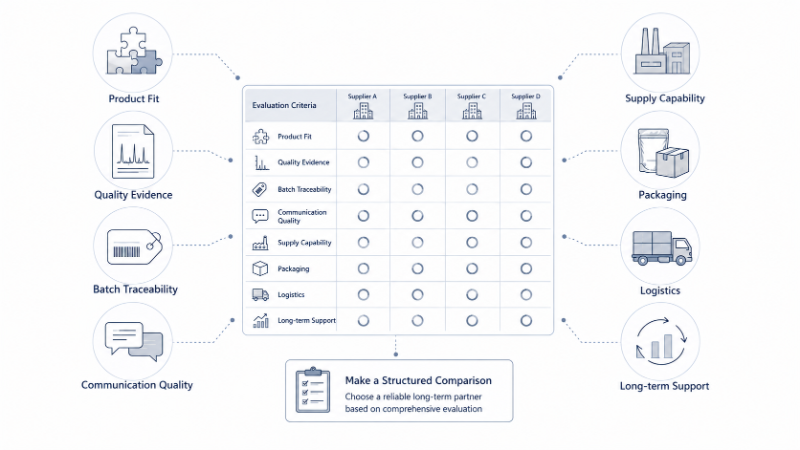
I recommend using a scorecard.
A scorecard helps buyers move away from vague impressions. It creates a structured way to compare suppliers across the areas that affect the complete purchasing process.
I usually place quality evidence and communication near the top of the scorecard. These two areas reveal a lot.
A supplier may offer a low quotation. Yet if the supplier cannot provide clear documentation or answer questions about packaging, lead time, and future supply, the apparent saving may disappear quickly.
Peptide Supplier Selection Scorecard
| Evaluation Area | Questions Buyers Should Ask | Suggested Priority |
|---|---|---|
| Product Fit | Can the supplier provide the exact peptide, quantity, and specification? | High |
| Quality Evidence | Are COA, HPLC, and MS reports available where applicable? | High |
| Traceability | Are batch numbers and test dates clear? | High |
| Communication | Are answers direct, clear, and timely? | High |
| Supply Capability | Can the supplier support trial, pilot, and future wholesale quantities? | High |
| Packaging | How will the peptide be packed, sealed, and labeled? | Medium |
| Logistics | What shipping options and preparation timelines are available? | Medium |
| Technical Coordination | Can the supplier support custom or technical questions? | Medium |
| Price | Is the quotation competitive for the required service level? | Medium |
| Long-Term Support | Can the supplier coordinate repeat orders consistently? | High |
At MoxPeptide, we welcome this type of evaluation.
We believe that a professional supplier should make the buyer’s decision easier. A supplier should explain what is available, what needs confirmation, and how the sourcing plan can move forward.
How to Know if a Peptide Supplier Is Legit?
A polished website is not proof of supply reliability. Buyers need to verify whether the supplier’s information is consistent across the entire sourcing process.
A legitimate peptide supplier provides clear product details, available analytical reports, traceable records, realistic lead times, packaging information, and direct answers to technical and logistics questions.
I look for consistency.
The quotation, product name, purity specification, analytical documents, packaging details, and delivery timeline should fit together.
One professional-looking PDF is not enough. A supplier should also be able to explain whether the document is representative or batch-specific. The supplier should explain how the product will be packed. The supplier should separate preparation time from shipping time.
I also pay attention to how the supplier handles questions.
A serious supplier does not avoid a question because the answer requires internal confirmation. It is better to provide a careful answer than an unrealistic promise.
Supplier Legitimacy Checklist
| Area | What Buyers Should Verify | Practical Question |
|---|---|---|
| Product Identity | Peptide name, sequence, molecular formula, molecular weight | Does the product match my requirement? |
| Purity | HPLC result and stated specification | Which report supports the purity claim? |
| Molecular Identity | MS data where applicable | Does the observed result match the expected peptide? |
| Traceability | Batch number and test date | Which documents relate to the supplied material? |
| Packaging | Container type, sealing method, quantity per pack | How will the product be protected during shipping? |
| Storage | Recommended temperature and handling | How should the material be stored after receipt? |
| Delivery | Preparation time and shipping options | What is the realistic delivery plan? |
| Communication | Clear and consistent answers | Can the supplier coordinate the sourcing process effectively? |
At MoxPeptide, we believe buyers should ask these questions before placing an order.
Our role is to make the sourcing process easier to understand. We coordinate product information, available documentation, packaging details, logistics options, and repeat-order planning so buyers can make informed decisions.
Do You Need a License to Manufacture Peptides?
This question sounds simple. Yet the correct answer depends on the peptide, intended use, jurisdiction, manufacturing activity, and destination market.
There is no single universal licensing rule for every peptide manufacturing project. Requirements depend on local regulations, intended use, product classification, production activities, and the market where the peptide will be supplied.
I recommend that buyers avoid treating the word “licensed” as a complete answer.
A supplier may say that it operates legally. That statement still does not tell the buyer whether the product is suitable for a specific application or market.
The buyer should first define the intended use.
A cosmetic ingredient project may require one type of review. A research-use project may require a different review. A regulated pharmaceutical project requires a much more specific regulatory pathway. Custom synthesis may also involve different requirements depending on the sequence, modification, use case, and destination.
Questions Buyers Should Ask About Regulatory Fit
| Question | Why It Matters |
|---|---|
| What is the intended use of the peptide? | Different uses may involve different requirements. |
| Which country will receive the product? | Destination-market rules may differ. |
| Is the material for research, cosmetic development, or another application? | Product classification affects review. |
| What documents are available? | Buyers need records for internal and external review. |
| Are additional requirements needed for this project? | Some applications require more specific documentation or controls. |
| Who should confirm regulatory suitability? | Buyers may need qualified legal or regulatory advice. |
At MoxPeptide, we help buyers clarify the intended use, available documentation, packaging, and supply requirements at the beginning of the discussion.
We also believe that buyers should confirm regulatory suitability for their intended use with qualified advisors and relevant local authorities. A responsible supplier should support clear communication, not make broad promises that ignore the buyer’s market.
Where Do Peptide Companies Get Their Peptides?
Many peptide companies do not rely on one supply model. The industry includes manufacturers, distributors, exporters, and professional supply partners.
Peptide companies may source directly from specialized manufacturers or work with supply partners that coordinate production, documentation, packaging, logistics, and communication.
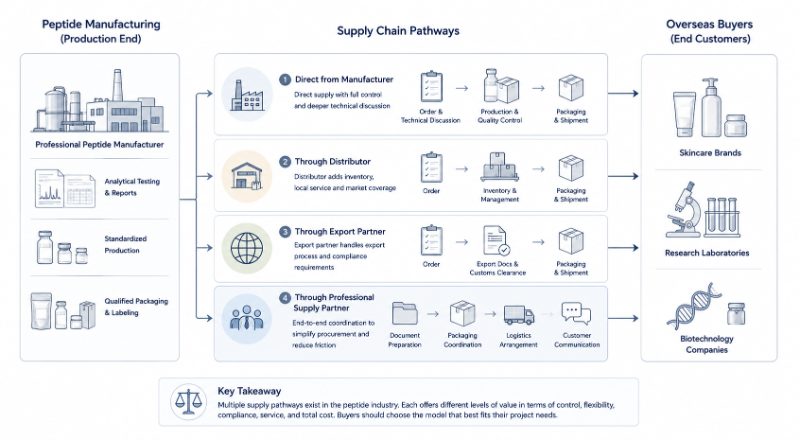
I think buyers should understand the difference between access and control.
A company may have access to a peptide catalog. That does not automatically mean it has a reliable process for handling quality documents, repeat orders, logistics, and technical questions.
The buyer should ask how the supplier manages the sourcing process.
Common Peptide Supply Models
| Supply Model | Main Strength | Point Buyers Should Review |
|---|---|---|
| Direct Manufacturer | Production control | International communication and documentation process |
| Distributor | Regional access and convenience | Product origin and traceability |
| Export Partner | Cross-border support | Technical coordination and quality records |
| Basic Trading Company | Broad product access | Actual value added beyond forwarding quotations |
| Professional Supply Partner | End-to-end coordination | Manufacturing resource qualification and execution quality |
At MoxPeptide, we operate as a professional peptide supply partner.
We work from Xi’an, one of China’s major life-science and biotechnology hubs. Our role is to connect global cosmetic brands, research teams, and biotech companies with qualified peptide manufacturing resources while improving documentation clarity, communication, packaging coordination, and international logistics.
We do not believe that overseas buyers should spend their time managing every production and communication detail alone. Our job is to reduce that friction.
What Value Should a Peptide Supply Partner Add?
A middle layer without a clear purpose creates extra cost. A strong supply partner should solve real procurement problems.
A professional peptide supply partner should improve supplier coordination, documentation clarity, technical communication, packaging, logistics, and repeat-order planning.
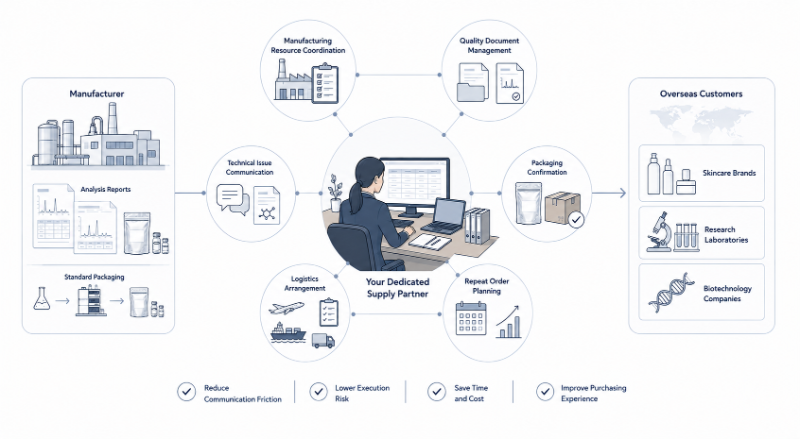
I think this is the most important question in the manufacturer-versus-trading-company discussion.
The buyer should not ask only:
Are you adding a margin?
The buyer should also ask:
What value are you adding?
A basic intermediary may only forward a quotation. That is not enough.
A professional supply partner should reduce sourcing friction and save the buyer time. The partner should help organize information. The partner should coordinate answers. The partner should help manage documentation, packaging, delivery planning, and repeat-order requirements.
Value-Added Supply Partner Checklist
| Supply Partner Function | Practical Value for Buyers |
|---|---|
| Manufacturing Resource Coordination | Matches buyer requirements with suitable supply capabilities |
| Documentation Management | Helps buyers review available COA, HPLC, MS, SDS, and product records |
| Communication Support | Reduces delays caused by unclear or fragmented communication |
| Packaging Coordination | Clarifies container type, sealing method, and pack size |
| Logistics Planning | Confirms shipping options and separates preparation time from transit time |
| Technical Coordination | Helps route questions to the right technical resources |
| Repeat-Order Support | Improves continuity as demand grows |
| Project Understanding | Aligns sourcing decisions with the buyer’s actual application |
At MoxPeptide, this is where we focus our work.
We do not position ourselves as a simple catalog seller. We support the complete international sourcing process. We help buyers move from inquiry to documentation review, qualification order, delivery, and repeat supply with greater clarity.
What Are the Hidden Costs of Buying Directly From a Factory?
Direct factory sourcing may reduce one visible cost. Yet buyers should also calculate the time, risk, and coordination costs that are less obvious.
The hidden costs of direct factory sourcing may include communication delays, documentation confusion, logistics coordination, packaging misunderstandings, internal follow-up time, and repeat-order management.
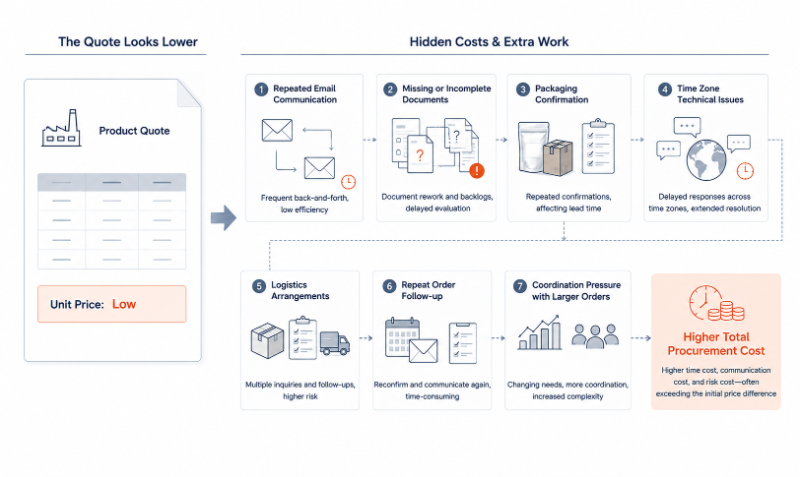
I do not believe buyers should avoid direct factories. Direct sourcing can work very well when the buyer has the right internal resources and the factory has a strong international process.
Yet direct purchasing is not automatically efficient.
A low unit price may require more work from the procurement team. The buyer may need to coordinate technical questions across time zones. The buyer may need to request missing documents several times. The buyer may need to explain packaging requirements repeatedly. The buyer may also need to manage shipping details and repeat-order planning without a clear point of contact.
Visible and Hidden Sourcing Costs
| Cost Type | Example |
|---|---|
| Product Cost | Unit price and minimum order quantity |
| Communication Cost | Time spent clarifying basic details |
| Documentation Cost | Internal time spent reviewing incomplete records |
| Logistics Cost | Delays caused by unclear preparation and shipping plans |
| Quality Risk Cost | Rework, replacement, or project disruption |
| Scale-Up Cost | Problems when future order volumes increase |
| Relationship Cost | Time spent rebuilding trust with a new supplier |
At MoxPeptide, our role is to reduce these hidden costs.
We coordinate sourcing details before they become problems. This does not mean every project is simple. It means buyers receive a clearer process and a more reliable point of contact.
When Should Buyers Choose a Direct Manufacturer?
A direct factory relationship can be valuable when the project requires close technical involvement and the buyer can manage the complete sourcing process.
Buyers may prefer a direct manufacturer when they need close production access, complex custom synthesis, larger-scale planning, and have the resources to manage documentation, communication, and logistics directly.
I think direct sourcing works best when several conditions are present.
The buyer understands the technical requirements clearly. The factory has a responsive international sales and technical team. The documentation process is organized. Packaging and shipping responsibilities are clear. The buyer also has enough internal capacity to manage the relationship over time.
Direct Manufacturer May Be Suitable When
| Situation | Why Direct Sourcing May Help |
|---|---|
| Complex Custom Synthesis | Close technical discussion may be useful. |
| Large Predictable Volumes | Production planning may benefit from direct coordination. |
| Strong Internal Procurement Team | The buyer can manage follow-up and logistics. |
| Established Factory Relationship | Communication and documentation processes are already clear. |
| Specific Production Requirements | The buyer needs detailed production discussions. |
The important point is that direct sourcing should be chosen because it fits the project, not because the word “manufacturer” sounds safer.
When Should Buyers Choose a Professional Supply Partner?
A supply partner is especially valuable when buyers need a reliable bridge between manufacturing resources and international procurement requirements.
Buyers may prefer a professional peptide supply partner when they need coordinated documentation, responsive communication, flexible quantities, logistics support, and dependable repeat-order planning.
Many buyers do not want to manage several disconnected conversations.
They want one point of contact who understands the project and can coordinate the details.
A cosmetic brand may need samples first and wholesale quantities later. A research laboratory may need several peptides with clear analytical reports. A biotech company may need a custom synthesis discussion before scale-up. A distributor may need packaging and repeat-order planning across multiple products.
Professional Supply Partner May Be Suitable When
| Situation | Why a Supply Partner Helps |
|---|---|
| International Sourcing | One point of contact reduces communication friction. |
| Documentation Review | The buyer needs organized analytical records. |
| Flexible Quantities | The project may move from samples to larger orders. |
| Multiple Products | Coordination becomes more important as the catalog grows. |
| Packaging and Logistics | The buyer needs clearer shipping preparation. |
| Repeat Orders | Long-term planning becomes more important than one quotation. |
| Limited Internal Resources | The buyer wants a more manageable sourcing process. |
At MoxPeptide, this is the value we aim to provide.
We coordinate qualified manufacturing resources, available analytical documentation, packaging, shipping options, and future supply planning for global buyers.
Our goal is not to add unnecessary complexity. Our goal is to remove it.
How Should Buyers Make the Final Decision?
The manufacturer-versus-trading-company question is useful, but it should not become the only decision rule.
Buyers should choose the supplier model that provides the best balance of quality evidence, transparency, communication, supply capability, logistics coordination, and long-term reliability.
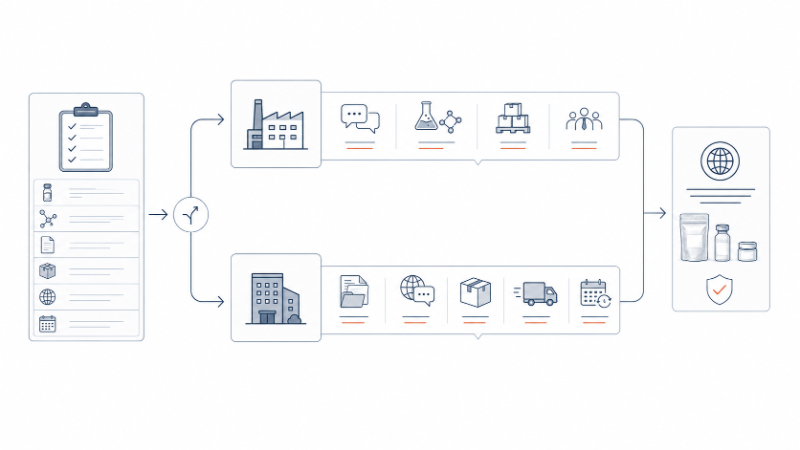
I recommend asking five final questions:
- Can the supplier provide the peptide specification and documentation that my project requires?
- Can the supplier communicate clearly and respond to technical questions?
- Can the supplier explain packaging, preparation time, and logistics realistically?
- Can the supplier support repeat orders as my project grows?
- Does the supplier reduce my workload or create more work?
The last question is often overlooked.
A strong supplier relationship should save the buyer time. It should create clarity. It should reduce uncertainty. It should help the buyer move forward with confidence.
Final Decision Framework
| Buyer Priority | What to Look For |
|---|---|
| Lowest Unit Price | Compare direct factory quotations carefully. |
| Strong Technical Access | Review manufacturer capabilities and technical support. |
| International Coordination | Look for a professional supply partner. |
| Documentation Clarity | Choose a supplier with an organized review process. |
| Flexible Ordering | Review MOQ and repeat-order support. |
| Long-Term Reliability | Focus on execution across multiple orders. |
At MoxPeptide, we believe that transparency is more valuable than labels.
We do not ask buyers to choose us because we use the right marketing language. We ask buyers to evaluate the process we provide: qualified manufacturing resources, clear documentation coordination, responsive communication, practical logistics support, and dependable long-term supply planning from Xi’an, China.
Conclusion
Buyers should not choose a peptide supplier based on the manufacturer-versus-trading-company label alone.
The right partner provides quality evidence, clear communication, organized documentation, realistic logistics, and stable long-term support.
At MoxPeptide, we help global cosmetic brands, research laboratories, distributors, and biotech innovators source peptides with greater confidence by reducing the friction between manufacturing, quality review, international communication, and supply planning.