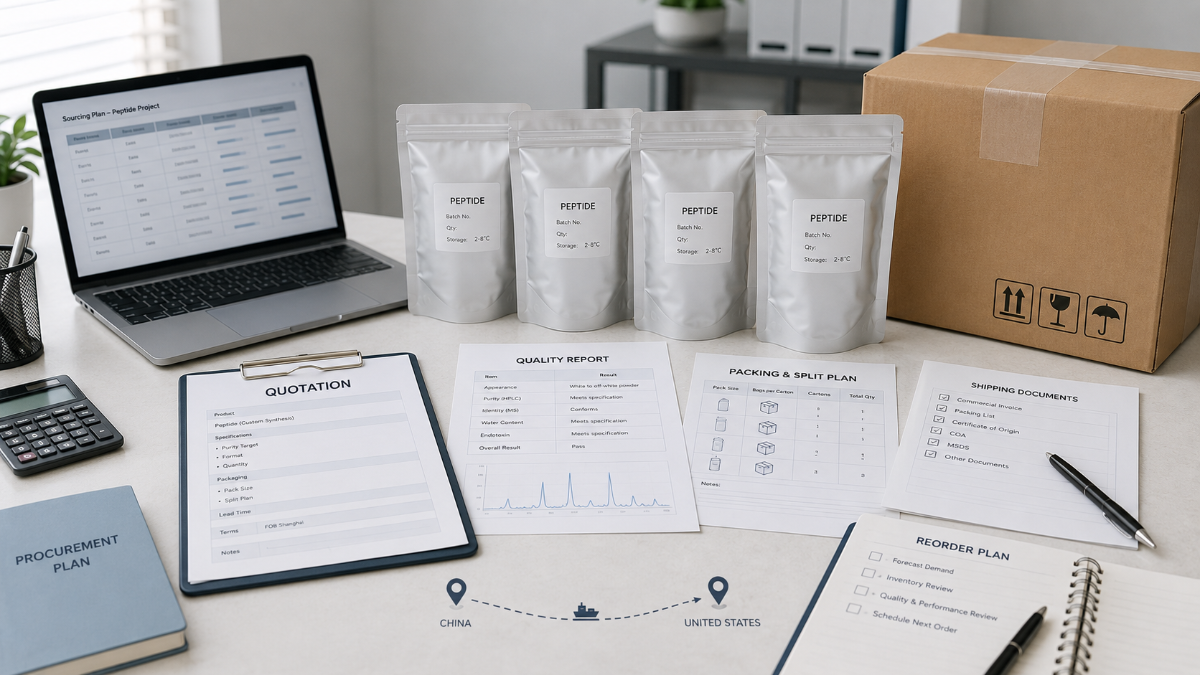
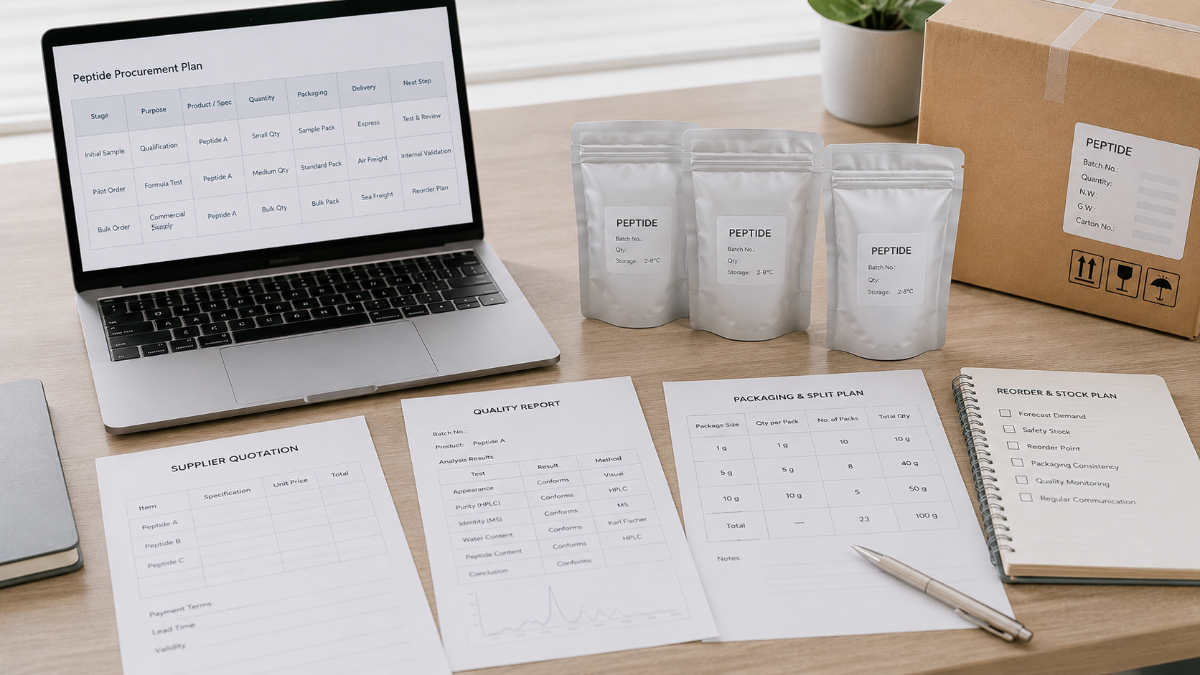
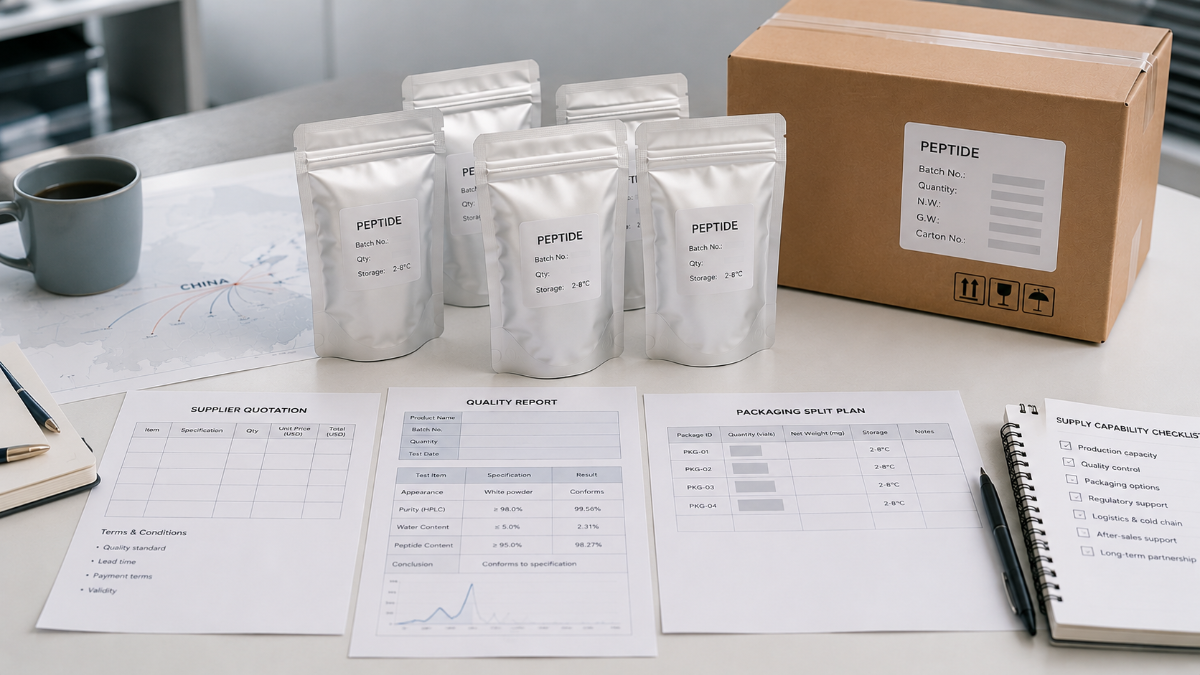
How to Qualify a New Peptide Supplier?
A new peptide supplier may offer an attractive quotation. Yet weak documentation, unclear traceability, and unreliable coordination can create costly problems after the first order.
To qualify a new peptide supplier, buyers should review product fit, analytical documentation, batch traceability, packaging, lead times, communication quality, regulatory fit, and repeat-order capability before scaling purchases.

At MoxPeptide, we work with cosmetic brands, research laboratories, distributors, and biotech companies that need a clear way to evaluate new peptide suppliers.
We understand why buyers want to move quickly. A new supplier may offer a better price, a broader product range, more flexible quantities, or faster communication. A sourcing opportunity can look promising during the first conversation.
Yet qualification should not be treated as a formality.
A supplier must fit the real needs of the project. The peptide specification must be clear. The available analytical reports must support the quality claim. Packaging and delivery planning must be realistic. The supplier must also communicate well enough to support future orders.
We believe that supplier qualification is not about creating unnecessary paperwork. It is about reducing uncertainty before a project becomes dependent on a new supply source.
Based in Xi’an, China, MoxPeptide serves as a professional B2B peptide supply partner. We help global buyers coordinate qualified manufacturing resources, analytical documentation, packaging, logistics, international communication, and long-term supply planning.
What Does It Mean to Qualify a Peptide Supplier?
A catalog and a quotation can start a conversation. They cannot show whether a supplier is ready to support a serious purchasing program.
Supplier qualification is the process of checking whether a peptide supplier can meet the buyer’s quality, documentation, logistics, communication, regulatory, and long-term supply requirements before larger orders are placed.
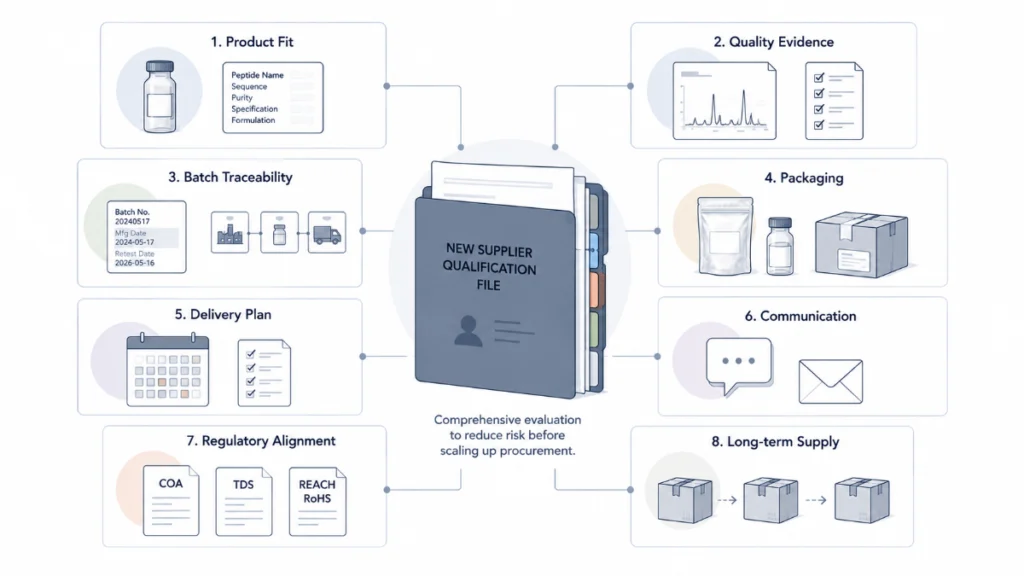
We view supplier qualification as a structured risk review.
The buyer is not only asking whether the supplier can ship a peptide. The buyer is also asking whether the supplier can deliver the correct material, provide useful records, communicate clearly, and support the next stage of the project.
For a cosmetic brand, the main concern may be batch consistency across future wholesale orders. For a research laboratory, the priority may be purity, molecular identity, and traceable documentation. For a biotech company, the project may require a custom sequence, modification, feasibility discussion, and a path toward scale-up.
The qualification process should reflect those differences.
What Supplier Qualification Should Confirm
| Qualification Area | Main Question |
|---|---|
| Product Fit | Can the supplier provide the correct peptide and specification? |
| Quality Evidence | Do the available reports support the quality claim? |
| Traceability | Can the supplied material be linked to relevant records? |
| Packaging | Will the peptide be packed and sealed appropriately? |
| Delivery Planning | Are preparation time and shipping time clearly explained? |
| Communication | Can the supplier answer technical and logistics questions directly? |
| Regulatory Fit | Is the sourcing plan suitable for the intended use and destination market? |
| Long-Term Supply | Can the supplier support repeat orders and future growth? |
At MoxPeptide, we use these areas to guide our conversations with buyers.
We do not send the same generic response to every inquiry. We ask about the peptide, quantity, intended application, target purity, packaging needs, destination country, documentation requirements, and future demand.
This helps us build a sourcing plan that fits the project.
What Are the 7 Steps to Qualify a New Peptide Supplier?
A fast first order can feel efficient. Yet skipping qualification steps may create more work later.
The seven supplier qualification steps are requirement definition, initial screening, documentation review, technical evaluation, logistics confirmation, qualification ordering, and ongoing performance monitoring.
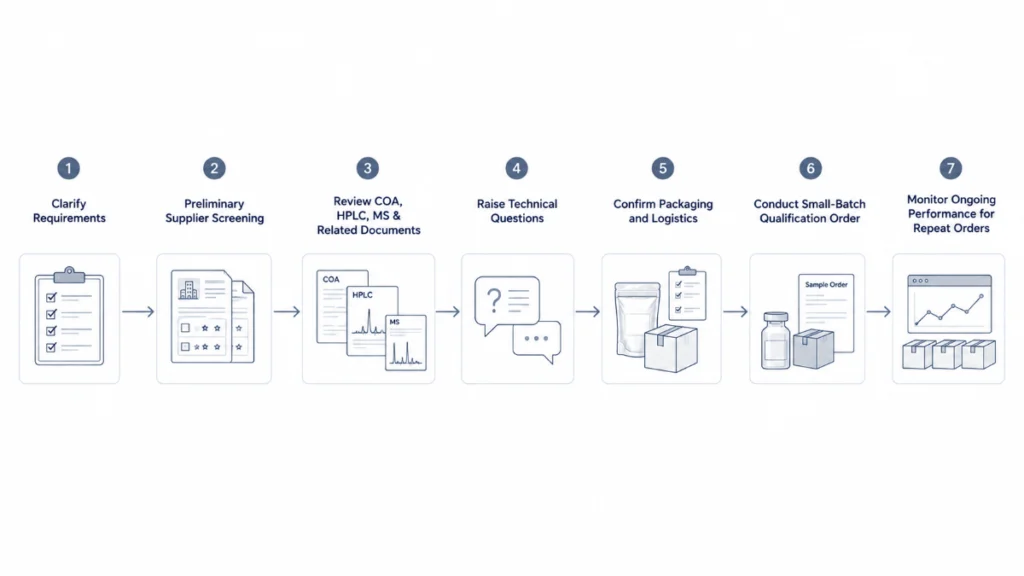
We recommend using a step-by-step approach.
Each step answers a different question. Together, the steps help buyers separate promising suppliers from suppliers that may create avoidable risks.
The first step is defining the real requirement. A buyer should confirm the peptide, quantity, target purity, intended application, destination, packaging preference, and timeline.
The next steps test the supplier’s ability to support the project. A supplier should provide clear product information, relevant documentation, realistic logistics details, and responsive communication.
A qualification order then gives the buyer a chance to review actual performance before increasing volume.
The 7-Step Peptide Supplier Qualification Process
| Step | What We Recommend Reviewing | What It Helps Confirm |
|---|---|---|
| 1. Define Requirements | Product, purity, quantity, use case, destination, packaging, timeline | The real sourcing need |
| 2. Screen the Supplier | Company profile, product range, communication quality, supply model | Initial suitability |
| 3. Review Documentation | COA, HPLC, MS, SDS, specifications, available batch records | Quality evidence |
| 4. Ask Technical Questions | Identity, purity, sequence, storage, scale, custom requirements | Supplier coordination capability |
| 5. Confirm Logistics | Packaging, sealing, preparation time, shipping options, tracking | Delivery readiness |
| 6. Place a Qualification Order | Product, documents, packaging, delivery, communication | Actual performance |
| 7. Monitor Repeat Orders | Batch consistency, document quality, lead time, support | Long-term suitability |
At MoxPeptide, we help buyers move through these steps without unnecessary friction.
Some customers begin with a small quantity for internal review. Some begin with a pilot order for formulation work. Others already need wholesale supply or a custom synthesis discussion.
We aim to make each stage clear, practical, and manageable.
What Should Buyers Ask Before Qualifying a New Supplier?
A supplier may answer a pricing question quickly. Yet qualification requires a wider discussion.
Before qualifying a new peptide supplier, buyers should ask about the exact product, purity target, analytical reports, batch traceability, packaging, storage, preparation time, shipping options, and repeat-order support.
We recommend sending a structured inquiry.
A clear inquiry helps the supplier understand the real project. It also makes supplier comparison easier.
Peptide Supplier Qualification Questions
- Can you confirm the exact peptide name, sequence, molecular formula, and molecular weight?
- What purity specification is available?
- Can you provide COA, HPLC, and MS reports whenever applicable?
- Are the available reports representative documents or batch-specific records?
- What is your MOQ?
- Can you support a qualification order before a larger purchase?
- How will the peptide be packed, sealed, and labeled?
- What storage conditions do you recommend?
- Is the material available or produced after order confirmation?
- What is the preparation timeline?
- Which shipping options are available for my destination?
- Will tracking information be provided after dispatch?
- Can future batches meet the same agreed specification?
- Who will coordinate technical questions?
- Can you support larger quantities if the project grows?
At MoxPeptide, we welcome this type of inquiry.
Direct questions help us understand what matters to the buyer. They also help us coordinate the right product information, available records, packaging details, and logistics plan.
What Documents Should Buyers Review Before Qualifying a Supplier?
A supplier may describe a peptide as high purity. Without useful records, the buyer has limited evidence to review.
Before qualifying a peptide supplier, buyers should review available COA, HPLC, MS, SDS, product specifications, packaging information, and batch-specific records whenever applicable.
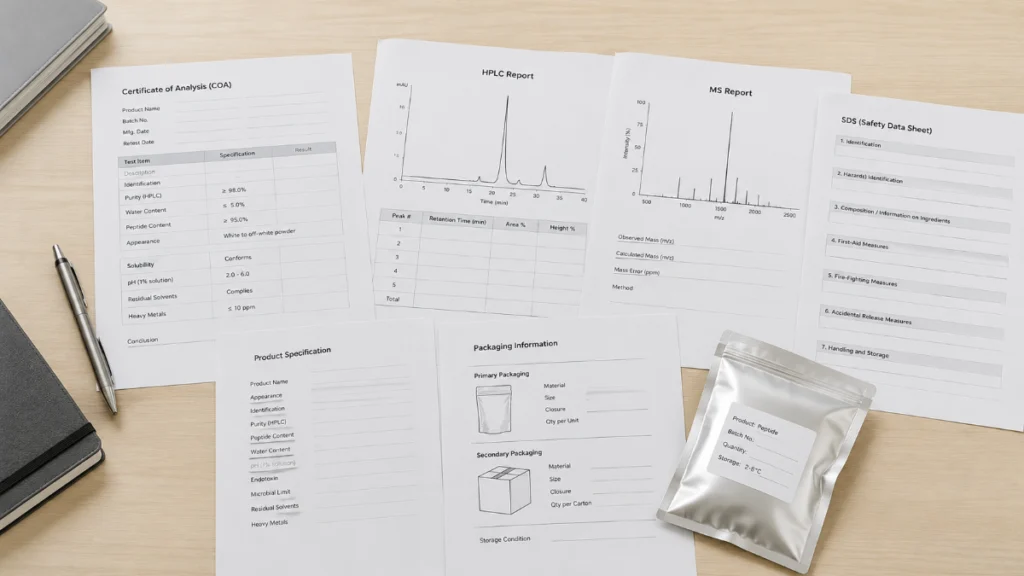
At MoxPeptide, we treat documentation as a core part of supplier qualification.
A COA gives the buyer a summary of the reported product results. An HPLC report helps the buyer review purity. An MS report helps confirm molecular identity. An SDS supports handling and storage review. A product specification helps define the expected target. Packaging information helps the buyer prepare for receiving and internal storage.
We also explain the difference between representative documents and shipment-specific records.
A representative document may help a buyer review the reporting format before placing an order. A shipment-specific document helps connect the delivered material with the relevant batch whenever applicable.
Essential Qualification Documents
| Document | What It Helps Review | Key Details to Check |
|---|---|---|
| COA | Product and batch summary | Product name, batch number, purity result, test date |
| HPLC Report | Purity profile | Reported purity, main peak, secondary peaks, test date |
| MS Report | Molecular identity | Expected and observed molecular mass |
| SDS | Handling and storage | Recommended storage and safety guidance |
| Product Specification | General target standard | Appearance, available grade, target purity |
| Packaging Information | Shipment preparation | Container type, seal, pack size, labeling |
| Batch Records | Traceability | Batch reference and linked documents |
| Custom Synthesis Summary | Project-specific requirements | Sequence, modifications, quantity, purity target |
We do not believe that documentation should be treated as a random collection of attachments.
A useful documentation package should make the sourcing decision easier. It should help the buyer understand what is available, which records apply to the product, and what still needs confirmation.
This is one of the areas where MoxPeptide adds value. We help buyers coordinate product information and available records across the sourcing process instead of leaving them to manage fragmented communication alone.
How Do Buyers Verify Peptide Quality During Qualification?
A purity percentage can look impressive. Yet one number does not explain the complete quality picture.
Buyers should evaluate peptide quality through HPLC purity analysis, MS identity confirmation, COA review, batch traceability, packaging, storage guidance, and repeat-order consistency.
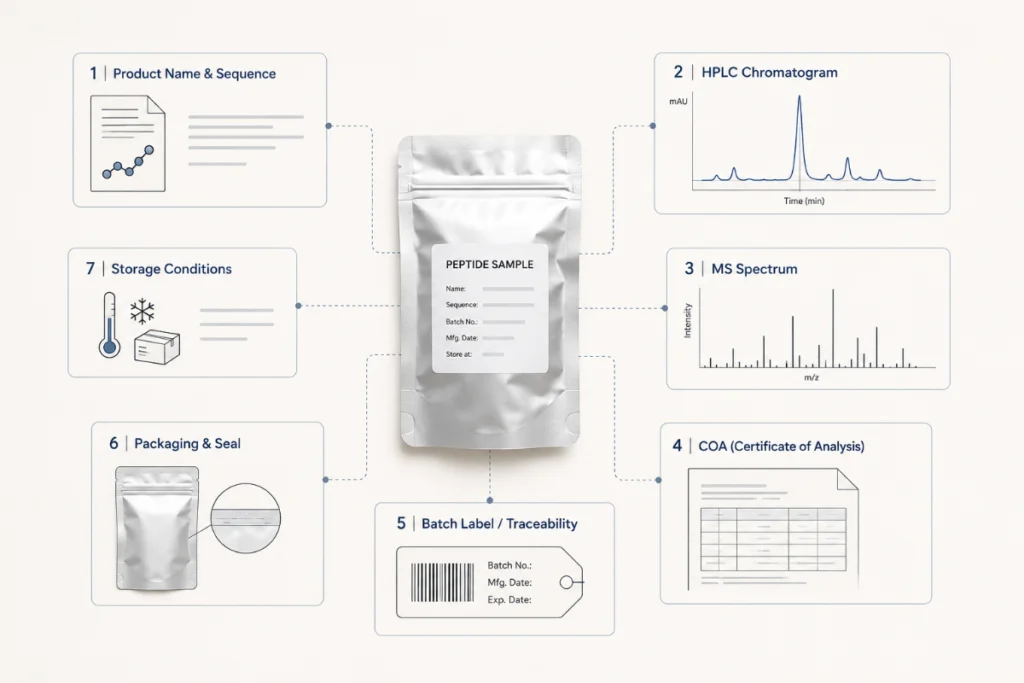
We review peptide quality through several layers.
Each layer answers a different question.
HPLC helps review the purity profile. MS helps confirm whether the molecular identity matches the expected peptide. The COA summarizes the reported batch information. Batch references help connect the documents to the relevant material. Packaging and storage guidance help protect the product after dispatch.
We also consider the intended application.
A cosmetic brand may focus on consistent formulation performance and stable wholesale supply. A research laboratory may place more weight on analytical records and sequence accuracy. A custom synthesis project may require a detailed technical discussion about modifications, feasibility, scale, and timeline.
Peptide Quality Qualification Framework
| Quality Area | What Buyers Should Review | Main Question |
|---|---|---|
| Identity | Product name, sequence, molecular formula, MS report | Is this the intended peptide? |
| Purity | HPLC report and target specification | Does the purity meet the project requirement? |
| Traceability | Batch number, test date, linked records | Can the material be connected to the documents? |
| Consistency | Repeat-order records and agreed specification | Can future batches meet the same requirement? |
| Packaging | Container, sealing method, quantity per pack | Will the material arrive in suitable condition? |
| Storage | Recommended temperature and handling | Can product stability be protected after delivery? |
| Communication | Supplier response to technical questions | Can the supplier support internal review? |
At MoxPeptide, we do not assume that every buyer needs the same specification.
We begin by understanding the project. Then we coordinate the available quality information that supports the buyer’s review.
How Do You Know if a Peptide Supplier Is Legit?
A polished website can create a good first impression. Yet supplier qualification requires more than appearance.
A legitimate peptide supplier provides clear product information, relevant analytical documentation, traceable records, realistic delivery planning, packaging details, and direct answers to technical questions.
We recommend checking whether the complete sourcing story fits together.
The product name should match the quotation. The purity claim should be supported by the available analytical report. The batch reference should be clear when shipment-specific records are available. The packaging method should fit the quantity. The delivery plan should separate preparation time from shipping time.
We also recommend paying attention to the quality of the supplier’s answers.
A strong supplier does not need to answer every technical question immediately. Some questions require internal confirmation. Yet the supplier should communicate clearly, follow up properly, and avoid unrealistic promises.
Peptide Supplier Legitimacy Checklist
| Area | What Buyers Should Verify | Practical Question |
|---|---|---|
| Product Information | Product name, sequence, molecular formula, molecular weight | Does this match the required peptide? |
| Purity | HPLC report and stated specification | Which report supports the purity claim? |
| Molecular Identity | MS data whenever applicable | Does the observed molecular mass match the expected value? |
| Traceability | Batch number, test date, linked records | Which documents relate to the supplied material? |
| Packaging | Container type, seal, quantity per pack | How will the product be protected during shipment? |
| Storage | Recommended conditions | How should the product be handled after receipt? |
| Delivery | Preparation time and transit options | What is the realistic delivery plan? |
| Communication | Clear and consistent responses | Can the supplier coordinate the full sourcing process? |
At MoxPeptide, we welcome this type of review.
We believe that buyers should ask direct questions before placing an order. Clear questions help buyers make stronger decisions. They also help us prepare a better sourcing plan.
Do You Need FDA Approval to Sell Peptides?
The phrase “FDA approved” is often used too broadly. The correct answer depends on product classification, intended use, marketing claims, and destination market.
FDA approval requirements depend on the intended use of the peptide. New human drugs generally require FDA approval before U.S. marketing, while cosmetic ingredients usually follow a different regulatory pathway. Buyers should confirm the correct pathway for each project.
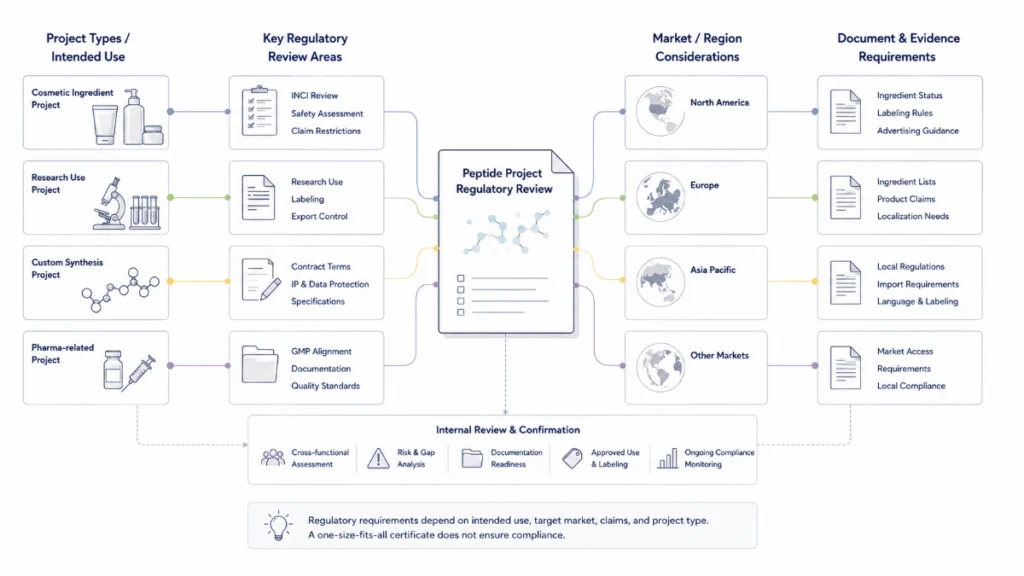
We recommend treating regulatory fit as a project-specific question.
A peptide is not regulated in exactly the same way in every situation.
A finished product marketed as a human drug raises different questions from a cosmetic ingredient, a research material, or a custom synthesis project. The destination market also matters. Rules may differ between the United States, the European Union, the United Kingdom, and other markets.
For the United States, the FDA explains that drugs generally require premarket approval through the New Drug Application process or must comply with an applicable over-the-counter drug framework.
The FDA also provides an official Drug Approvals and Databases portal that buyers can use when reviewing U.S.-market claims.
Cosmetic products and ingredients usually follow a different pathway. The FDA explains that cosmetics and cosmetic ingredients generally do not require premarket approval, with the exception of color additives.
Cosmetics must still be safe for their intended use and properly labeled.
The Modernization of Cosmetics Regulation Act of 2022 (MoCRA) also introduced additional requirements for parts of the cosmetic industry, including facility registration and product listing requirements in applicable situations.
We recommend avoiding broad statements such as:
This product is FDA certified.
That phrase can create confusion.
Registration, listing, or possession of a number does not automatically mean that FDA has approved a product. Buyers should review the specific product classification and intended market pathway instead.
Regulatory Questions Buyers Should Ask
| Question | Why It Matters |
|---|---|
| What is the intended use? | Product classification may depend on use and claims. |
| Which market will receive the product? | Regulatory requirements vary by destination. |
| Is the material intended for cosmetic development, research, or another application? | Different pathways may apply. |
| What product claims will be made? | Claims may affect regulatory classification. |
| What records are available? | Internal compliance teams may need supporting documents. |
| Does the buyer need regulatory advice? | Qualified advisors should review market-specific questions. |
At MoxPeptide, we ask buyers to clarify intended use and destination market at the beginning of the discussion.
We coordinate available product information and documentation. We also encourage buyers to confirm regulatory suitability with qualified advisors and relevant authorities for their specific application.
We believe that responsible sourcing requires clear information, not broad claims.
Is “Research Use Only” Enough for a Peptide Supplier?
A label can be useful. Yet a label alone does not determine the full regulatory position of a product.
A “Research Use Only” label should match the actual intended use, product descriptions, website content, marketing claims, and sales process. It should not be treated as a blanket substitute for regulatory review.
We recommend reviewing the complete context.
A supplier should not rely on one disclaimer while using language that points in a different direction. Product descriptions, website content, customer communication, and intended application should remain consistent.
The FDA explains that a product’s intended use may be established through claims made on labeling, advertising, websites, or other promotional materials. The official FDA page Is It a Cosmetic, a Drug, or Both? provides a useful explanation of how claims may affect product classification.
This is not only a theoretical issue.
In a 2026 FDA warning letter concerning peptide products, the agency explained that statements such as “Research Use Only” and “not intended for human consumption” did not override other website content that indicated an intended human drug use.
For procurement teams, the lesson is practical.
The buyer should clarify the intended use. The supplier should communicate accurately. Product information should match the project. The sourcing process should avoid vague or conflicting claims.
Research-Use Qualification Questions
| Question | Why It Matters |
|---|---|
| What is the buyer’s intended use? | The sourcing plan should match the real application. |
| How is the product described? | Product descriptions should remain accurate and consistent. |
| What claims appear in marketing materials? | Claims may affect regulatory interpretation. |
| What documentation is available? | Records support internal review and traceability. |
| Does the destination market require additional review? | Rules may differ across jurisdictions. |
| Who should confirm compliance? | Qualified advisors should review project-specific questions. |
At MoxPeptide, we focus on clear B2B communication.
We work with cosmetic brands, laboratories, distributors, and biotech companies that have different sourcing needs. We ask questions early so that the product information, documentation package, and supply plan match the project as closely as possible.
What Certifications Do You Need to Sell Peptides?
A long list of badges can look reassuring. Yet the right records depend on the product, intended use, supply model, and destination market.
There is no single universal certification list for every peptide sale. Buyers should request records that fit the product classification, intended use, manufacturing process, destination market, and internal qualification requirements.
We recommend separating three ideas:
- Product quality evidence
- Business or facility records
- Market-specific regulatory requirements
These areas overlap, but they are not interchangeable.
A COA, HPLC report, and MS report help review the product. They do not replace market-specific regulatory review.
A facility registration or product listing may be relevant in some situations. It should not be described as product approval.
The FDA makes this distinction clear in its official overview: Is It Really “FDA Approved”?
For cosmetic projects, buyers may also review the FDA’s official page for Registration and Listing of Cosmetic Product Facilities and Products.
The FDA states on that page that cosmetic product facility registration and product listing are not cosmetic approval programs and should not be used as promotional tools.
The same principle applies to National Drug Code numbers.
The FDA’s official NDC Product File Definitions page explains that assignment of an NDC number does not mean that FDA has approved a product.
A quality-management certificate may provide useful information about a supplier’s systems. Yet it does not automatically prove that every individual batch meets the buyer’s specification.
Records Buyers May Request During Qualification
| Record Type | What It Helps Buyers Review | Important Limitation |
|---|---|---|
| COA | Reported batch quality summary | It should be reviewed with supporting data. |
| HPLC Report | Purity profile | It does not confirm molecular identity alone. |
| MS Report | Molecular identity | It does not replace purity analysis. |
| SDS | Handling and storage guidance | It does not prove product quality alone. |
| Product Specification | Target requirements | It may differ from shipment-specific results. |
| Batch Records | Traceability | They should relate clearly to the supplied material. |
| Quality-System Records | Supplier process maturity | They do not replace batch-level review. |
| Facility Records | Business or operational context | They do not automatically prove product approval. |
| Regulatory Records | Market-specific suitability | Requirements depend on product classification and destination. |
At MoxPeptide, we help buyers understand which available records fit their project.
We do not believe in sending a long list of documents without context. We believe that the right documentation package should support a clear decision.
How Much Does It Cost to Start a Peptide Company?
The cost of starting a peptide business depends on the business model. A sourcing company, distributor, cosmetic brand, research supplier, and manufacturing facility have very different cost structures.
The cost of starting a peptide company varies widely based on whether the business manufactures peptides, distributes products, develops cosmetic formulations, manages custom synthesis projects, or serves research buyers.
We do not believe that a single number is useful.
A direct manufacturing operation may need synthesis equipment, purification systems, analytical instruments, trained personnel, facilities, process controls, and quality-management systems.
A sourcing partner or distributor may focus more on supplier qualification, documentation management, inventory decisions, logistics, customer communication, and market-specific review.
A cosmetic brand may focus on formulation, product development, safety review, packaging, and finished-product requirements.
Cost Areas That Depend on the Business Model
| Cost Area | Why It Matters |
|---|---|
| Product Development | The project may involve standard products or custom sequences. |
| Manufacturing | Direct production requires equipment, facilities, and skilled personnel. |
| Testing | Analytical review may include HPLC, MS, and other methods. |
| Documentation | Buyers need organized records for internal review. |
| Packaging | Pack size, sealing, labeling, and storage conditions affect cost. |
| Logistics | Shipping requirements depend on destination and product format. |
| Regulatory Review | Requirements depend on intended use and market. |
| Customer Support | International communication and repeat-order planning require resources. |
For buyers, the more useful question is not how much it costs to start a peptide company.
The better question is:
Does this supplier have the systems needed to support my project reliably?
At MoxPeptide, we focus on the practical needs behind that question. We coordinate product information, available analytical documentation, packaging, logistics, and long-term supply planning so buyers can move forward with greater clarity.
Who Is the Most Reputable Peptide Supplier?
A supplier may describe itself as reputable. Procurement teams still need a practical way to test that claim.
The most reputable peptide supplier is the one that consistently provides suitable products, relevant analytical documentation, clear communication, realistic planning, and dependable support across repeat orders.
We do not believe that one company is automatically the best fit for every buyer.
A cosmetic brand may need stable wholesale quantities and formulation consistency. A research laboratory may need analytical records and traceability. A biotech company may need custom sequence support, modifications, confidentiality, and scale-up planning. A distributor may need packaging flexibility, product range, and repeat-order coordination.
The buyer should qualify the supplier against the real project.
Reputable Supplier Indicators
| Indicator | Why It Matters |
|---|---|
| Clear Product Information | Buyers need the correct peptide and specification. |
| Relevant Analytical Reports | Buyers need evidence behind quality claims. |
| Traceable Records | Buyers need to connect material with documents. |
| Responsive Communication | International sourcing requires clear coordination. |
| Realistic Timelines | Buyers need dependable planning. |
| Packaging Clarity | Buyers need suitable receiving and storage preparation. |
| Flexible Quantities | Projects may move from testing to larger orders. |
| Repeat-Order Support | Long-term supply depends on continuity. |
At MoxPeptide, we build our service around these requirements.
Our role is not limited to sending product lists. We help buyers coordinate qualified manufacturing resources, available analytical documentation, packaging, logistics, international communication, and repeat-order planning from Xi’an, China.
We aim to earn trust through execution.
How Should Buyers Use a Qualification Order?
A large first order can increase risk. A qualification order gives the buyer a practical way to review supplier performance.
A qualification order helps buyers evaluate actual product quality, documentation, packaging, communication, and delivery performance before scaling purchases.
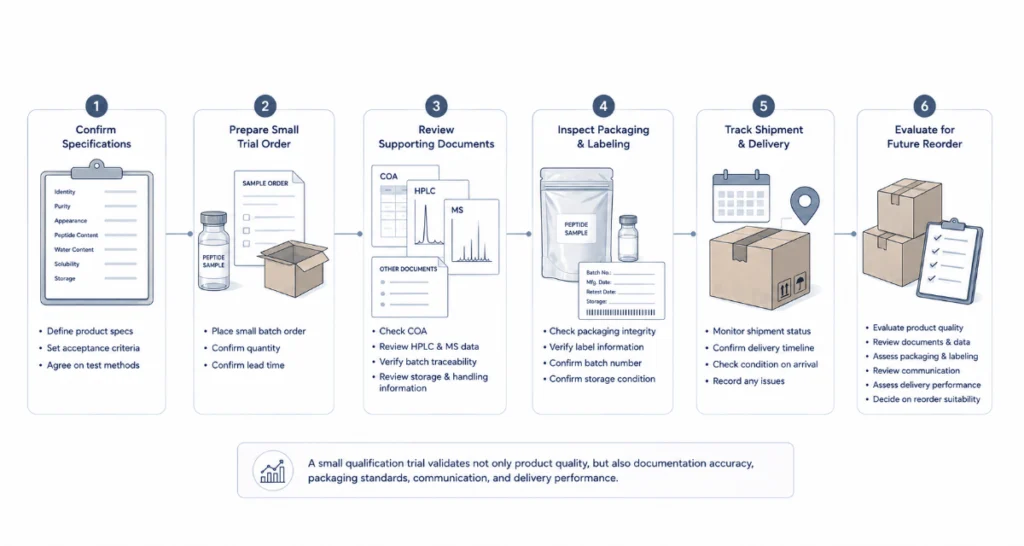
We recommend choosing a first order that fits the project.
The quantity should be meaningful enough for internal review. It should also remain manageable enough to reduce unnecessary exposure.
During the qualification order, the buyer should review more than the peptide itself.
The buyer should review how the supplier confirms the specification. The buyer should review how documents are prepared. The buyer should review packaging, labeling, sealing, communication, dispatch timing, and tracking updates.
A successful qualification order creates a foundation for repeat supply.
Qualification Order Review Checklist
| Review Area | What Buyers Should Check |
|---|---|
| Product | Does the material match the agreed specification? |
| Documentation | Are the relevant records clear and organized? |
| Packaging | Is the product sealed, labeled, and packed appropriately? |
| Communication | Are updates clear and timely? |
| Delivery | Does the actual timeline match the agreed plan? |
| Traceability | Can the delivered material be linked to relevant records? |
| Repeat Supply | Can future orders follow the same standard? |
At MoxPeptide, we support buyers from the first inquiry through qualification and repeat ordering.
Some customers begin with a small cosmetic peptide order for formulation testing. Some begin with a research peptide order for internal review. Some begin with a custom synthesis feasibility discussion.
We aim to make the next step clear.
What Red Flags Should Buyers Watch for During Qualification?
Some risks become visible before the first order. Buyers should not ignore them.
Common peptide supplier red flags include unclear product details, missing analytical reports, inconsistent batch references, unrealistic timelines, vague packaging information, conflicting claims, and poor follow-up communication.
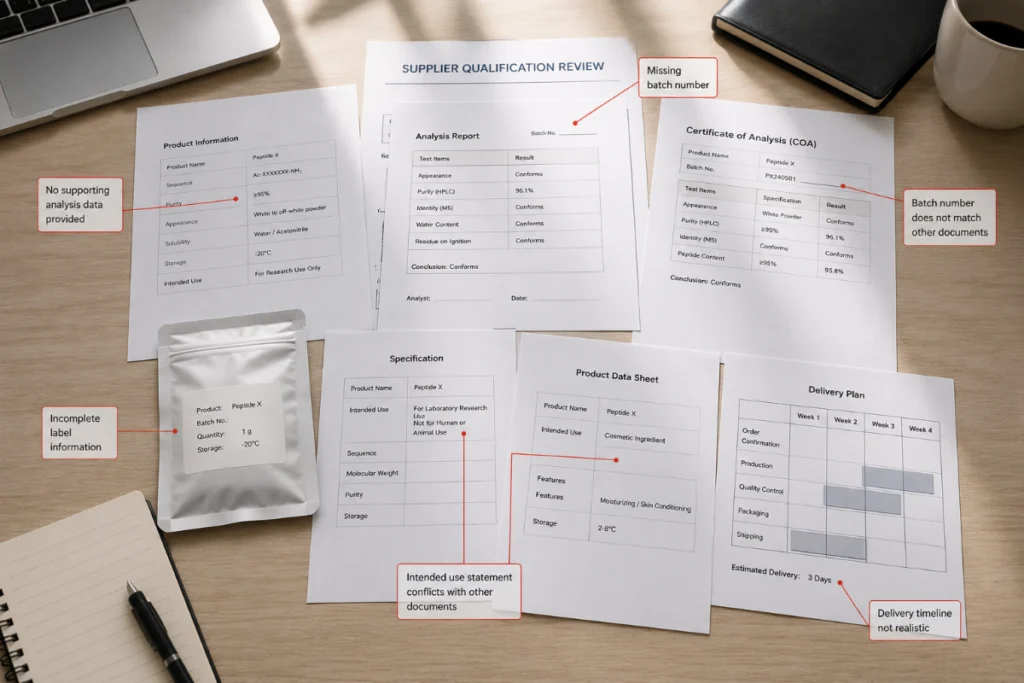
We recommend paying attention to patterns rather than isolated mistakes.
A missing detail may require a simple follow-up question. That is normal. Yet repeated inconsistencies can indicate a weak sourcing process.
Supplier Qualification Red Flags
| Red Flag | Why It Matters | Practical Follow-Up Question |
|---|---|---|
| Generic Purity Claim | The buyer cannot review the basis of the claim. | Which HPLC report supports the stated purity? |
| Missing MS Data | Molecular identity may be harder to review. | Is MS data available for this peptide? |
| Different Batch References | Documents may not relate to the same material. | Which records apply to the shipment batch? |
| Unclear Packaging | Receiving and storage planning become harder. | How will the product be sealed and packed? |
| Unrealistic Timelines | The supply plan may not be dependable. | What is the preparation time before dispatch? |
| Conflicting Product Claims | Regulatory interpretation may change. | How is the intended use defined? |
| Weak Communication | Repeat-order coordination may become difficult. | Who will manage follow-up questions? |
At MoxPeptide, we believe that transparency is the best way to reduce these risks.
A professional sourcing process should help the buyer understand what is confirmed, what still needs review, and what the next step should be.
What Makes a New Peptide Supplier Suitable for Long-Term Supply?
A supplier may complete one order successfully. A long-term supply partner must also support the buyer as the project changes.
A long-term peptide supply partner should provide stable quality, organized documentation, flexible quantities, responsive communication, realistic delivery planning, and dependable repeat-order coordination.
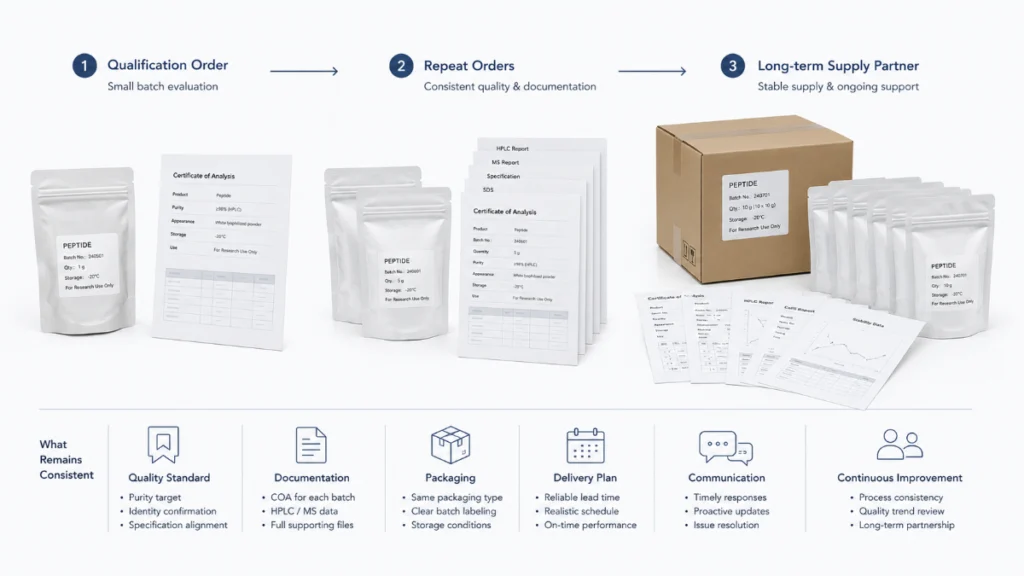
We believe that the most important qualification question is:
Can this supplier support the next stage of the project?
A cosmetic brand may begin with formulation testing and later need wholesale quantities. A research laboratory may begin with one peptide and later expand its product requirements. A biotech company may begin with feasibility review and later need a larger custom synthesis order.
The supplier should be ready to support that development.
Long-Term Supply Indicators
| Indicator | Why It Matters |
|---|---|
| Stable Quality | It reduces project risk. |
| Consistent Documentation | It supports internal review and repeat purchasing. |
| Flexible Quantities | It supports trials, pilot orders, and future growth. |
| Responsive Communication | It reduces friction during international sourcing. |
| Realistic Planning | It reduces avoidable delays. |
| Technical Coordination | It supports changing project requirements. |
| Repeat-Order Support | It improves supply continuity. |
At MoxPeptide, this is the role we aim to play.
Based in Xi’an, China, we connect global buyers with qualified peptide manufacturing resources while coordinating analytical documentation, packaging, logistics, international communication, and long-term supply planning.
We do not treat qualification as the end of the process.
We treat it as the beginning of a reliable working relationship.
Useful FDA Resources for U.S.-Market Review
The following official FDA resources can support internal review for projects involving the United States:
| FDA Resource | When It Is Useful |
|---|---|
| Is It Really “FDA Approved”? | Helps buyers distinguish approval, registration, listing, and other regulatory concepts. |
| Is It a Cosmetic, a Drug, or Both? | Explains how intended use and product claims may affect classification. |
| Drug Approvals and Databases | Helps buyers review U.S. drug approval information. |
| FDA Authority Over Cosmetics | Explains how cosmetics are regulated in the United States. |
| Modernization of Cosmetics Regulation Act of 2022 | Explains the expanded FDA framework for cosmetics. |
| Registration and Listing of Cosmetic Product Facilities and Products | Explains cosmetic facility registration and product listing requirements. |
| NDC Product File Definitions | Explains why an NDC number does not automatically mean product approval. |
| FDA Warning Letter Concerning Peptide Products | Shows why product claims and website content should remain consistent with the stated intended use. |
These resources are starting points. They do not replace project-specific regulatory advice.
Conclusion
A new peptide supplier should be qualified through evidence, not assumptions.
At MoxPeptide, we help buyers evaluate product fit, analytical documentation, quality, packaging, logistics, communication, and long-term supply planning so that sourcing decisions can move forward with greater confidence.