Questions to Ask a Peptide Supplier Before Ordering
A low quotation can look attractive. Yet missing documents, unstable batches, and poor communication can turn a simple peptide order into an expensive supply problem.
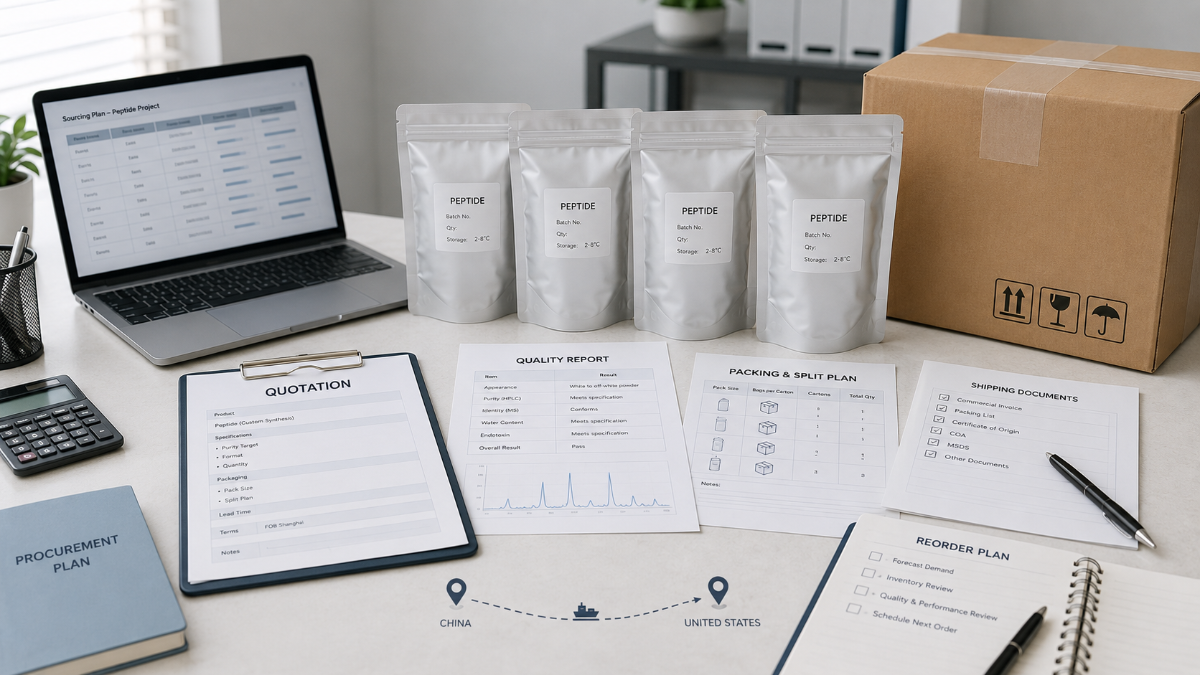
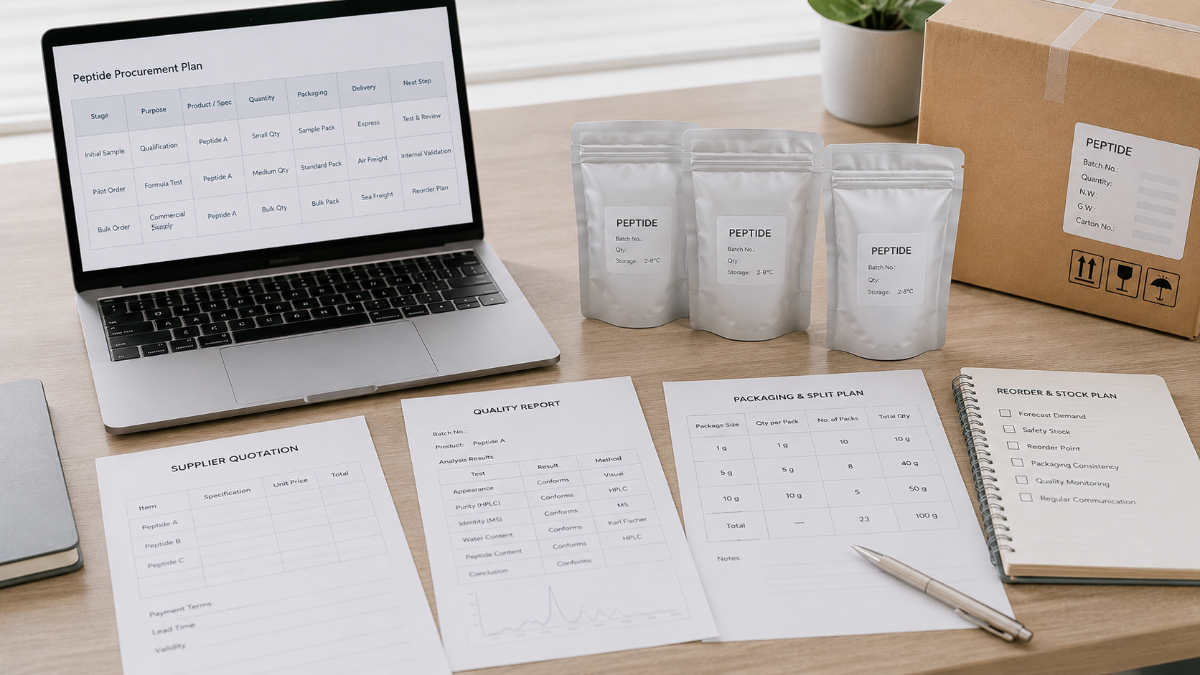
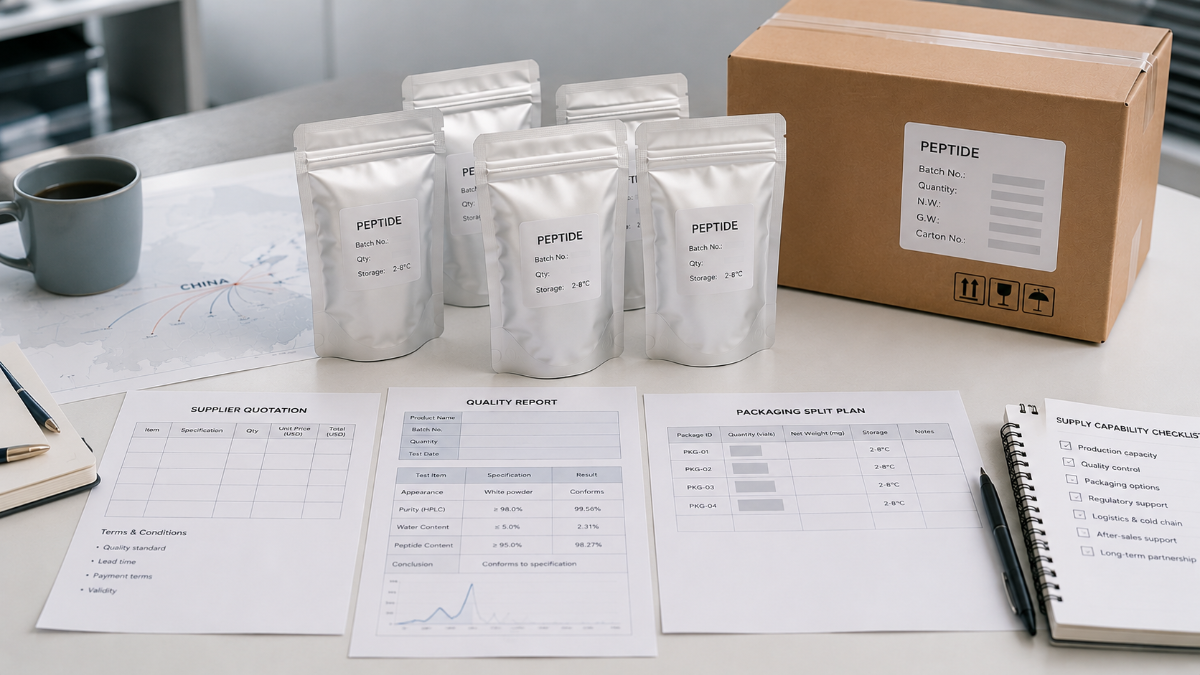
Before ordering peptides, I recommend asking about purity, identity testing, batch traceability, documentation, packaging, shipping, lead times, and future supply capacity. I also recommend checking how clearly the supplier answers technical questions before placing the first order.
When I speak with peptide buyers, I often notice the same pattern. Many buyers start by asking for a catalog and a price list. This is understandable. Price matters. Yet price alone does not tell me whether a supplier can support a serious project.
I prefer to treat the first conversation as a supplier qualification process. I want to know what the supplier can deliver, how the supplier checks quality, and how the supplier handles future orders. I also want to know whether the supplier understands the needs of cosmetic brands, research teams, and biotech companies.
The best questions do more than help me collect information. They help me see how the supplier works. A supplier who gives clear answers, complete reports, and realistic timelines is usually easier to work with after payment. A supplier who avoids basic questions may create larger problems later.
What Should I Look for When Ordering Peptides?
A peptide may look acceptable on a product list. Yet the real buying risk often appears in the details that are missing from the quotation.
When ordering peptides, I check the exact sequence or product name, purity specification, test reports, batch number, quantity, packaging format, storage requirements, lead time, shipping method, and the supplier’s ability to support repeat orders.
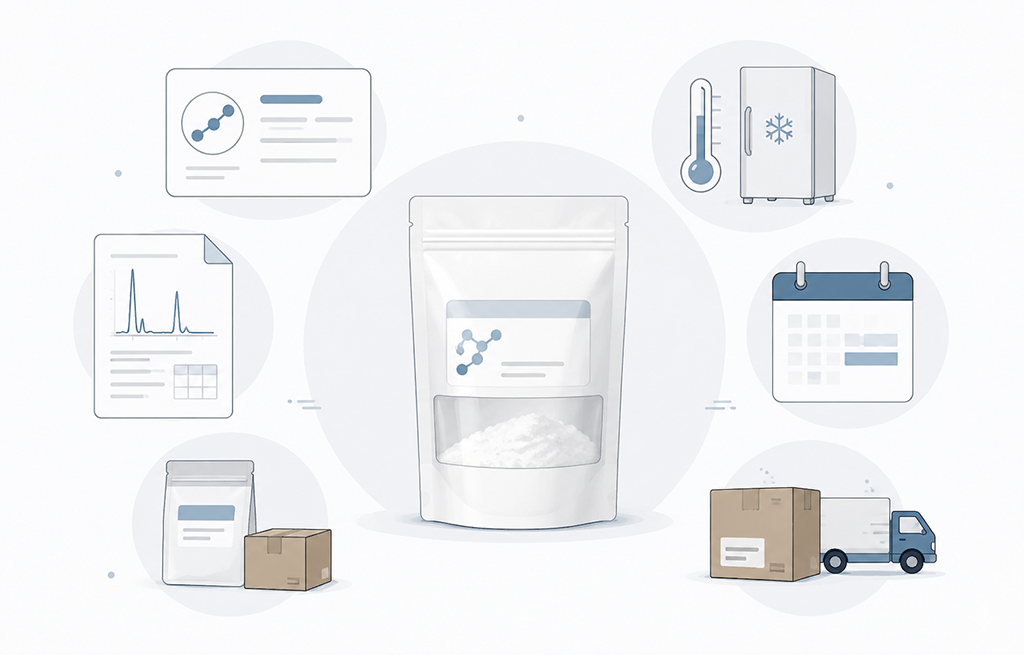
I start with the intended use. A cosmetic brand may focus on formulation consistency and stable repeat supply. A research laboratory may focus more on the exact chemical sequence, purity level, and analytical evidence. A biotech company may need custom synthesis, confidentiality, and scale-up support.
I do not use one buying checklist for every project. I first define what the peptide must do inside the buyer’s workflow. Then I ask the supplier questions that match that use case.
My Basic Peptide Ordering Checklist
| Area | Questions I Ask Before Ordering | Why I Ask |
|---|---|---|
| Product identity | What is the exact peptide name, sequence, molecular formula, and molecular weight? | I want to avoid product confusion and naming errors. |
| Purity | What purity specification can you provide for this batch? | I need a clear quality target before comparing quotations. |
| Quantity | What is the MOQ? Can you support sample, pilot, and bulk quantities? | I want to know whether the supplier can support future growth. |
| Documentation | Can you provide COA, HPLC, and MS reports for the supplied batch? | I need evidence, not only a quality claim. |
| Packaging | How will the peptide be packed and sealed? | I want to reduce contamination and stability risks. |
| Storage | What storage conditions do you recommend? | I need to plan receiving, storage, and internal handling. |
| Lead time | Is the material in stock or produced after confirmation? | I want a realistic delivery schedule. |
| Shipping | What shipping methods are available for my destination? | I need to understand transit time and logistics options. |
| Repeat supply | Can you maintain the same specification for future orders? | I want to reduce reformulation and procurement risk. |
I also ask the supplier to separate standard information from batch-specific information. A general product specification may describe the expected target. A batch report should describe the actual material that I am buying.
That difference matters. I do not want to receive a generic PDF that has no connection to my order. I want reports with a product name, batch number, test date, and relevant results.
What Documents Should a Peptide Supplier Provide?
A supplier may say that a peptide is high quality. Yet a serious buyer needs documents that make the quality claim easier to review and trace.
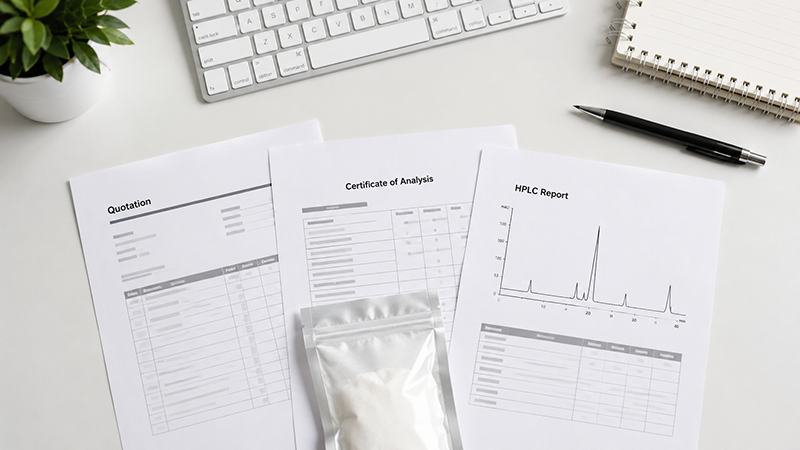
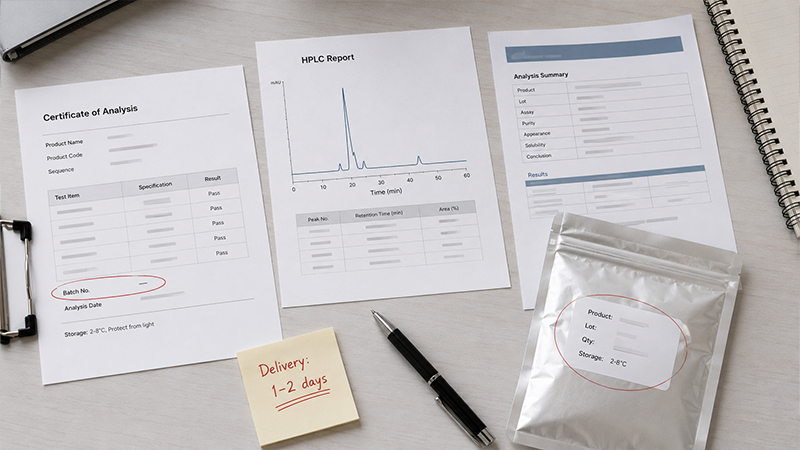
I usually ask for a Certificate of Analysis, HPLC report, and MS report before ordering peptides. I may also request SDS, TDS, storage guidance, packaging details, and batch-specific records based on the intended use and internal review process.
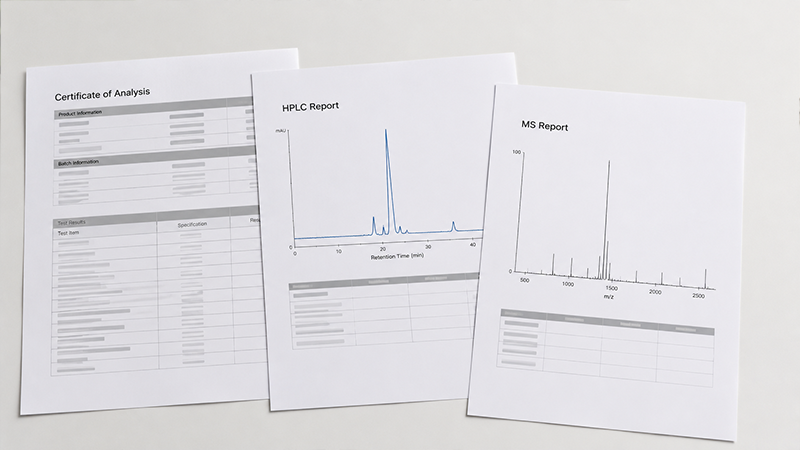
I do not treat all documents as interchangeable. Each document answers a different question. A COA gives me a summary. An HPLC chromatogram helps me review purity. An MS report helps me confirm molecular identity.
I also check whether the documents appear to belong to the same batch. The product name, batch number, and test date should be clear. If the supplier sends unrelated files with different batch references, I ask for clarification.
Documents I Commonly Request
| Document | What It Helps Me Check | What I Look for |
|---|---|---|
| COA | Overall batch summary | Product name, batch number, purity result, test date, storage guidance |
| HPLC report | Purity profile | Main peak, secondary peaks, chromatogram quality, test conditions |
| MS report | Molecular identity | Observed molecular mass and expected molecular mass |
| SDS | Safety and handling information | Storage, handling, transport, and internal safety review details |
| TDS or product specification | General product information | Appearance, solubility, recommended storage, and available grades |
| Packaging information | Shipment preparation | Container type, sealing method, quantity per pack |
| Custom synthesis record | Project-specific confirmation | Sequence, modification, scale, analytical method, and delivery scope |
I also ask whether the reports are available before shipment or only after order confirmation. For standard items, a supplier may provide representative documents during the first discussion and batch-specific documents before shipment. For custom synthesis, the final reports normally become available after production and testing.
I try to stay practical. I do not request documents only to create a longer email thread. I ask for the documents that help me make a decision.
How Do I Read a Peptide COA?
Many buyers ask for a COA. Yet a COA is only useful when I know what to check and what questions to ask next.
When reviewing a peptide COA, I check the product name, batch number, purity result, analytical method, test date, appearance, storage instructions, and whether the COA matches the HPLC and MS reports supplied for the same batch.
I treat the COA as the starting point, not the final proof. A COA is a summary document. It should make the batch easier to identify and review. It should not replace the supporting analytical data.
What I Check on a COA
| COA Item | Why It Matters | Question I Ask if It Is Missing |
|---|---|---|
| Product name | Confirms the material being reviewed | Does this report match the product in my quotation? |
| Batch number | Supports traceability | Which production batch will I receive? |
| Purity result | Shows the reported purity level | Which method was used to measure purity? |
| Test method | Explains how the result was generated | Is the purity result based on HPLC? |
| Test date | Helps me review document relevance | Is this a current batch report or a representative report? |
| Appearance | Helps with receiving inspection | What should the material look like when it arrives? |
| Storage condition | Helps protect product stability | What temperature and handling conditions do you recommend? |
| Authorized review | Shows internal document control | Who approved the report? |
I pay close attention to the batch number. If the quotation, COA, HPLC report, and MS report do not refer to the same batch, I ask the supplier to explain the difference.
I also distinguish between a sample COA and a shipment COA. A sample COA can help me understand the supplier’s reporting format. Yet the final shipment should have batch-specific documents.
How Do I Review an HPLC Report for Peptide Purity?
A supplier may write “≥99% purity” in a quotation. Yet I still want to see how that result appears in the chromatogram.
When reviewing a peptide HPLC report, I check the reported purity percentage, the main peak area, the presence of secondary peaks, the retention time, the test date, and whether the report is linked to the batch I will receive.
I often see buyers request an HPLC report and stop there. I prefer to review the report instead of treating the attachment as a checkbox.
A strong main peak is important. Yet I also look at the smaller peaks. Secondary peaks may indicate impurities, degradation products, or related substances. The report does not need to look visually perfect. It needs to be clear enough for a technical reviewer to understand what was tested.
Questions I Ask About an HPLC Report
| Question | Why It Matters |
|---|---|
| Does the report show the same batch number as the COA? | I want to know that the chromatogram belongs to the supplied material. |
| What purity percentage is reported? | I want to compare the result with my required specification. |
| Is there a clear main peak? | I want to understand the overall purity profile. |
| Are there visible secondary peaks? | I want to identify possible impurities or degradation signals. |
| Is the test date shown? | I want to know whether the report is recent and relevant. |
| Can the supplier explain the testing method? | I want to see whether the supplier understands the report. |
I also avoid treating one number as the whole quality story. A purity result can help me compare batches. Yet purity does not automatically confirm identity. That is why I also ask for MS data.
For some projects, a reported purity level of at least 99% may be appropriate. For other projects, the correct target depends on the intended use, formulation requirements, and internal standards. I do not assume that every peptide order needs the same specification.
How Does an MS Report Help Confirm Peptide Identity?
A peptide may show a strong purity result. Yet purity alone does not prove that the material has the intended molecular identity.
An MS report helps confirm peptide identity by comparing the observed molecular mass with the expected molecular mass. I review MS data together with HPLC results because the two reports answer different quality questions.
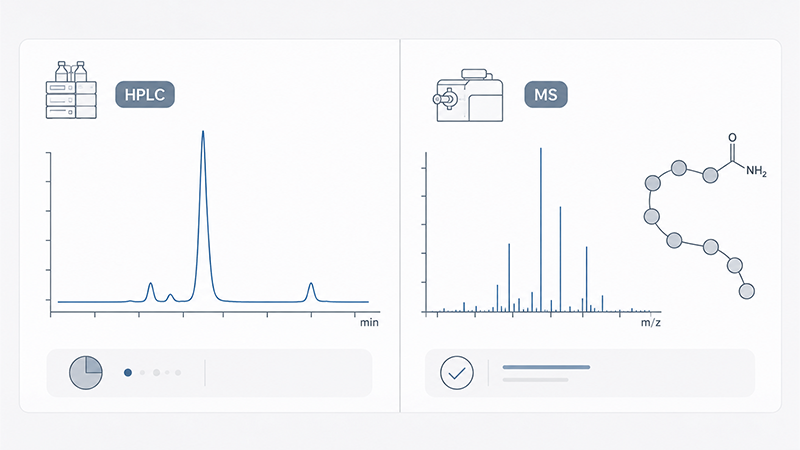
I use a simple rule when I review peptide documents: HPLC helps me ask, “How pure is the sample?” MS helps me ask, “Does the material match the expected peptide identity?”
These questions are related, but they are not the same.
HPLC and MS Serve Different Purposes
| Test | Main Question | What It Helps Me Evaluate |
|---|---|---|
| HPLC | How pure is the sample? | Main peak percentage and impurity profile |
| MS | Does the molecular mass match the expected peptide? | Molecular identity confirmation |
| COA | What are the summarized batch results? | Batch overview and traceability |
I ask the supplier to explain the expected molecular mass and the observed result when needed. I do not expect every procurement manager to interpret a complex spectrum alone. Yet I do expect the supplier to answer technical questions clearly or bring in a technical colleague.
This is also a useful supplier screening step. A supplier who can only forward documents without explaining them may be harder to work with when a project becomes more technical.
How Can I Evaluate a Peptide Supplier Before My First Order?
A polished website and a fast quotation can create a good first impression. Yet they do not show how the supplier will perform after payment.
Before my first peptide order, I evaluate response quality, document availability, technical knowledge, MOQ flexibility, lead-time clarity, packaging details, shipping options, and the supplier’s willingness to support a small qualification order.
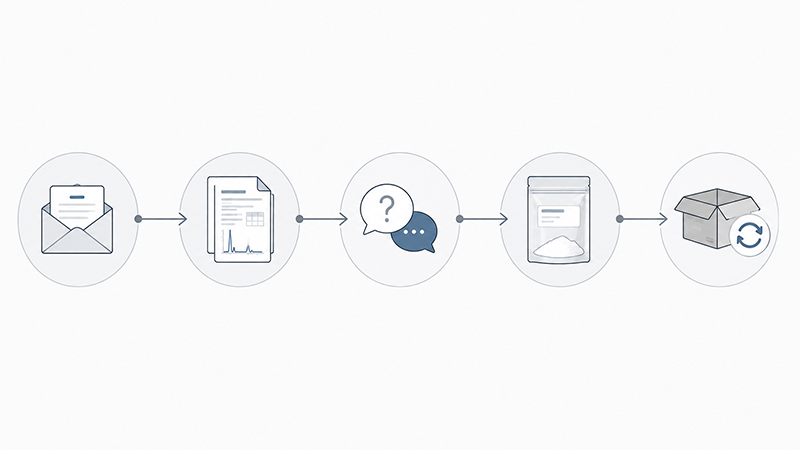
I prefer to use the first order as a qualification step. I do not start with the largest quantity unless the project requires it. I first check whether the supplier can deliver the product, documents, packaging, and communication quality that I expect.
My First-Order Supplier Screening Process
| Step | What I Do | What I Learn |
|---|---|---|
| 1. Send a clear inquiry | I list the peptide, quantity, intended use, and destination country. | I see whether the supplier answers the real request. |
| 2. Request documents | I ask for COA, HPLC, and MS reports. | I see whether the supplier is transparent and organized. |
| 3. Ask technical questions | I ask about purity, identity, packaging, and storage. | I see whether the supplier understands the material. |
| 4. Confirm logistics | I ask about lead time and shipping options. | I see whether the supplier provides realistic delivery information. |
| 5. Place a qualification order | I start with a suitable sample or pilot quantity. | I assess the product and service before scaling. |
| 6. Review repeat supply | I ask how future batches will be controlled. | I see whether the supplier can support a longer-term relationship. |
I also pay attention to the quality of the answers. A short answer is not always a bad answer. A clear answer can be short. Yet vague answers, copied text, and repeated avoidance are warning signs.
At MoxPeptide, I see my role as more than sending a quotation. I aim to make sourcing clearer for global buyers. I help connect buyers with peptide supply, analytical documentation, and responsive communication from Xi’an, China.
Who Is the Most Trusted Peptide Supplier?
Many suppliers describe themselves as trusted. Yet trust is not a label that I can verify from a homepage.
The most trusted peptide supplier is not simply the company with the lowest price or the largest catalog. I look for transparent documentation, consistent batch quality, technical understanding, clear communication, reliable logistics, and repeat-order support.
I do not believe that a buyer should choose a supplier based only on a marketing claim. I think trust is built through evidence and repeated performance.
A supplier may be a good fit for one buyer and a poor fit for another. A cosmetic brand may need stable bulk supply for formulation work. A research team may need analytical detail for smaller quantities. A biotech company may need a custom sequence, a modification, and a scale-up plan.
How I Define a Trusted Peptide Supplier
| Trust Factor | What Good Performance Looks Like |
|---|---|
| Documentation | The supplier provides clear and relevant COA, HPLC, and MS reports. |
| Traceability | The supplier uses batch references and keeps documents organized. |
| Communication | The supplier answers questions directly and within a reasonable time. |
| Technical support | The supplier can explain the material or involve a technical colleague. |
| Supply stability | The supplier can support repeat orders with consistent specifications. |
| Logistics clarity | The supplier explains packaging, lead time, and shipping options. |
| Problem handling | The supplier communicates clearly when an issue needs review. |
I also ask myself a simple question: does the supplier make the buying process easier to understand?
A good supplier does not pressure me to place an order before answering basic questions. A good supplier helps me reduce uncertainty.
How Do I Know if Peptides Are High Quality?
A purity percentage can look convincing. Yet high-quality peptide supply depends on more than one number in a quotation.
I evaluate peptide quality through HPLC purity analysis, MS identity confirmation, batch-specific COA review, traceability, packaging quality, storage guidance, and batch-to-batch consistency. I also check whether the supplied material matches the needs of the intended application.
I use several layers of review because each layer answers a different question.
My Peptide Quality Review Framework
| Quality Area | What I Review | Main Question |
|---|---|---|
| Identity | Product name, sequence, molecular formula, MS report | Is this the intended peptide? |
| Purity | HPLC report and stated specification | Does the purity meet my requirement? |
| Traceability | Batch number and batch-specific documents | Can I connect the material to the reports? |
| Consistency | Repeat-order records and supplier process | Can future batches meet the same standard? |
| Packaging | Container, seal, labeling, quantity per pack | Will the material arrive in suitable condition? |
| Storage | Temperature and handling instructions | Can I protect stability after receiving the order? |
| Communication | Technical answers and deviation handling | Can the supplier support me if a question appears? |
I also check whether the quality requirement matches the application. A cosmetic peptide buyer may care about formulation consistency, ingredient handling, and repeat bulk supply. A laboratory buyer may focus on sequence accuracy and analytical data. A custom synthesis buyer may focus on modifications, scale, and feasibility.
I avoid using vague words such as “premium” or “top quality” unless the supplier can explain what those words mean. I prefer measurable details.
What Are the Red Flags When Buying Peptides?
Some buying risks appear before the first payment. I look for these signals early because they can save time and reduce avoidable problems.
Common peptide supplier red flags include missing batch numbers, generic documents, unclear purity claims, no MS data, inconsistent answers, unrealistic lead times, weak packaging details, and pressure to pay before technical questions are answered.
I do not reject a supplier because one answer needs clarification. International sourcing often involves different time zones, translation issues, and internal coordination. Yet repeated confusion is different from one incomplete reply.
Peptide Supplier Warning Signs
| Warning Sign | Why It Concerns Me | What I Ask Next |
|---|---|---|
| No batch number on documents | I cannot confirm traceability. | Can you provide a batch-specific report? |
| COA without HPLC or MS support | I only have a summary claim. | Can you share the supporting analytical reports? |
| Different batch references across documents | The reports may not match the supplied material. | Which documents belong to the shipment batch? |
| Purity claim without test method | The number lacks context. | Was purity measured by HPLC? |
| Supplier cannot explain the documents | Technical support may be limited. | Can your technical team review my question? |
| Unrealistic lead time | The delivery promise may not be reliable. | Is the material in stock or produced after confirmation? |
| No clear packaging details | Receiving and storage risks may increase. | How will the product be sealed and packed? |
| Pressure to pay immediately | Important questions may remain unanswered. | Can we confirm the specification and documents first? |
I also pay attention to overpromising. A supplier who says yes to every request without asking questions may not fully understand the project. A professional supplier should sometimes ask me for more details.
For custom synthesis, this matters even more. Sequence length, modification type, scale, purity target, and timeline can affect feasibility. I prefer realistic answers over fast answers.
What Shipping and Packaging Questions Should I Ask?
A peptide order is not complete when production ends. Packaging and shipping can affect the receiving experience and the stability of the material.
Before shipment, I ask how the peptide will be packed, sealed, labeled, stored, and shipped. I also confirm the available shipping methods, expected transit time, destination requirements, and whether the supplier will provide tracking information.
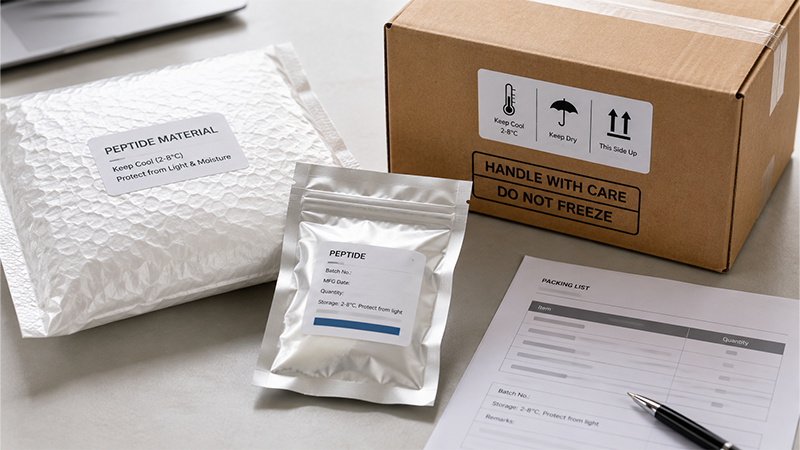
I ask for packaging details early because buyers often need to coordinate receiving procedures. A laboratory may need smaller packs. A cosmetic brand may prefer quantities that fit formulation trials and future production planning. A distributor may need a different packing structure for inventory control.
Packaging and Shipping Questions
| Topic | Question I Ask |
|---|---|
| Inner packaging | What container and sealing method will you use? |
| Pack size | How much peptide will be packed in each container? |
| Labeling | What information will appear on the label? |
| Storage | What storage conditions do you recommend before and after opening? |
| Shipping method | Which shipping options are available for my destination? |
| Transit time | What is the estimated delivery time after dispatch? |
| Tracking | Will you provide a tracking number? |
| Documentation | Which documents will be included or sent before shipment? |
| Bulk planning | Can you split a larger quantity into smaller sealed packs? |
I also separate production lead time from shipping transit time. These are not the same. A supplier may need time to prepare the material, complete testing, and arrange packaging before dispatch.
Clear expectations reduce frustration on both sides.
What Should I Ask When Ordering Custom Peptides?
Custom peptide synthesis needs more discussion than a standard product order. A short inquiry can create confusion when key details are missing.
For custom peptide synthesis, I provide the sequence, terminal modifications, special modifications, purity target, quantity, intended use, analytical requirements, and timeline. I also ask about feasibility, scale-up options, confidentiality, and final documentation.
I try to send a complete request from the start. This makes it easier for the supplier to review feasibility and prepare a useful quotation.
Information I Include in a Custom Peptide Inquiry
| Item | Example of What I Specify |
|---|---|
| Sequence | Full amino acid sequence |
| Terminal format | Free acid, amidation, acetylation, or other requirement |
| Modifications | Label, linker, conjugation, phosphorylation, or other modification |
| Quantity | mg, g, or larger scale requirement |
| Purity target | Required purity specification |
| Analytical package | COA, HPLC, MS, or additional testing needs |
| Intended use | Research, cosmetic development, or other project context |
| Timeline | Target delivery date |
| Scale-up plan | Possible future quantity |
| Confidentiality | Whether the project needs special handling |
I also ask what happens if the first synthesis route needs adjustment. Custom work can involve technical review. I prefer a supplier who communicates clearly about feasibility and trade-offs.
What Questions Should I Send to a Peptide Supplier?
A long inquiry does not need to be complicated. I use a clear list so the supplier can answer each point directly.
I recommend sending a structured peptide inquiry that covers product identity, quantity, purity, COA, HPLC, MS, MOQ, packaging, lead time, shipping, storage, and repeat-order support. Clear questions make supplier comparison faster and more reliable.
I often use a request like this:
Peptide Supplier Inquiry Checklist
- Can you confirm the exact product name, sequence, and molecular weight?
- What purity specification can you provide?
- Can you provide COA, HPLC, and MS reports?
- Are the reports batch-specific or representative samples?
- What is your MOQ?
- Can you support both qualification orders and future bulk orders?
- How will the peptide be packed and sealed?
- What storage conditions do you recommend?
- Is the material currently in stock or produced after confirmation?
- What is the estimated production lead time?
- What shipping methods are available for my destination?
- Will you provide tracking information after dispatch?
- Can you maintain the same specification for repeat orders?
- Who should I contact if I have a technical question?
- For custom peptides, what information do you need for feasibility review?
I use these questions to compare suppliers on more than price. I compare how clearly they answer, how organized their documents are, and how realistic their delivery plan is.
A strong supplier should make it easier for me to move from inquiry to qualification order and then to repeat supply.
Conclusion
I choose peptide suppliers by checking evidence, not promises. Clear documents, reliable communication, traceable batches, and realistic supply planning help me reduce purchasing risk.